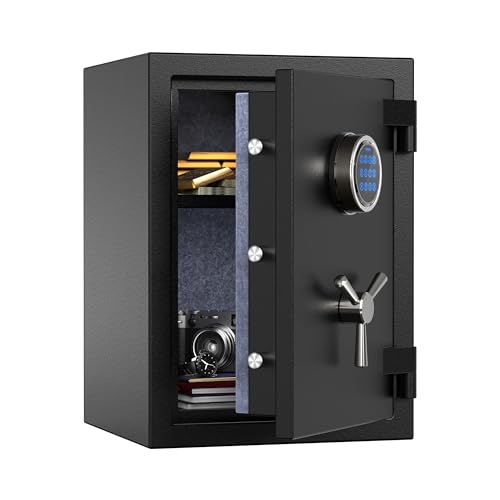
Banks use advanced vaults made primarily of steel-reinforced concrete, typically featuring panels up to 3 inches thick. These vaults incorporate high-security locking mechanisms, such as dual control combination locks and electronic systems, to prevent unauthorized access. The structure is designed to resist modern burglary techniques and fire hazards, ensuring asset protection. Understanding the specific types and features of these vaults can provide deeper insight into banking security protocols and standards in place.
Key Takeaways
- Banks primarily use steel-reinforced modular concrete vaults for enhanced security and durability against theft.
- Vaults feature thick doors, often up to 3.5 feet, deterring unauthorized access.
- Advanced locking mechanisms include dual control combination locks and biometric systems for higher security.
- Modern vaults comply with rigorous standards like EN 1300 for tampering resistance and security classification.
- Regular maintenance and inspections ensure the vaults remain effective against emerging security threats.
Design and Construction of Bank Vaults
When designing and constructing bank vaults, manufacturers focus on creating robust structures that can withstand modern burglary techniques. They utilize steel-reinforced concrete panels, typically 3 inches thick, providing enhanced strength compared to older 18-inch designs.
These panels, molded from a specialized concrete mix, cure quickly, guaranteeing efficiency. Vault doors, clad in stainless steel, incorporate the same reinforced material and feature advanced locking mechanisms, like dual control combination locks, secured by massive metal bolts.
Quality control by Underwriters Laboratories guarantees high resistance ratings against break-ins. Modern vaults also emphasize fire resistance, integrating various security measures to counter evolving threats effectively.
Types of Vaults Used in Banking
As financial institutions endeavor to enhance security, various types of bank vaults have emerged, each tailored to meet specific safety requirements.
Modern bank vaults typically feature steel-reinforced modular concrete panels, providing superior strength compared to older designs. These vaults often employ advanced security systems, including dual control combination locks that necessitate cooperation between two individuals for access.
Modern bank vaults utilize steel-reinforced concrete and advanced locking systems, enhancing security through collaborative access requirements.
The doors can be up to 3.5 feet thick, considerably deterring theft. Continuous advancements in alarm systems and anti-theft devices guarantee they counteract emerging threats.
Underwriters Laboratories, Inc. (UL) rigorously assesses these vaults, assuring compliance with stringent security standards against break-in attempts.
Security Features of Bank Vaults
When you examine the security features of bank vaults, you’ll notice advanced lock mechanisms that integrate mechanical and electronic systems for heightened protection.
Coupled with a reinforced structural design, these vaults boast steel-reinforced concrete panels that considerably enhance their resistance to unauthorized access.
Together, these elements guarantee that modern vaults meet stringent security standards while adapting to emerging threats.
Advanced Lock Mechanisms
Advanced lock mechanisms are the cornerstone of modern bank vault security, employing a combination of innovative technologies to safeguard assets. Financial institutions utilize mechanical combination locks, hybrid models, and electronic locks for enhanced protection. Importantly, dual control combination locks require simultaneous input from two authorized personnel, greatly reducing unauthorized access risks. Additionally, time locks prevent access during specific periods, further securing the vault. Compliance with standards like EN 1300 guarantees rigorous testing and classification of vault doors.
| Lock Type | Features | Security Level |
|---|---|---|
| Mechanical Combination | Manual input, reliable | B |
| Electronic Lock | Digital access, programmable settings | A |
| Dual Control Combination | Two-person requirement, high security | A |
Reinforced Structural Design
While the security of bank vaults heavily relies on sophisticated locking mechanisms, the reinforced structural design plays a crucial role in preventing unauthorized access.
Modern vaults utilize robust materials and construction techniques, including:
- Steel-reinforced modular concrete panels that enhance structural integrity.
- Reinforcing steel rods strategically placed during molding for increased penetration resistance.
- Vault doors, crafted from the same durable concrete, secured with complex locking systems and stainless steel cladding.
These features form a thorough security system, ensuring the protection of valuable assets against advanced burglary techniques, ultimately fortifying the vault’s defenses beyond mere locking mechanisms.
Locking Mechanisms in Bank Vaults
When it comes to locking mechanisms in bank vaults, mechanical combination locks and electronic lock systems are the primary options available.
Each type offers distinct advantages in security and usability, catering to different operational needs.
Understanding these mechanisms is essential for evaluating the overall security of the vault.
Mechanical Combination Locks
Mechanical combination locks serve as a cornerstone of bank vault security, employing a rotating dial mechanism to engage internal gears and open the vault. These locks address security needs by offering durability and reliability, functioning without electrical power and minimizing vulnerability to tampering.
Key features include:
- Multi-Dial Systems: Some locks incorporate multiple dials or levers, requiring unique combinations that change periodically.
- Dual Control Combination Locks: These designs necessitate two individuals to enter their combinations simultaneously, enhancing security.
- Lock Standards: Classified under EN 1300, they guarantee compliance with stringent resistance to tampering and forced entry in bank vaults.
Electronic Lock Systems
As bank security needs evolve, electronic lock systems have emerged as a vital component in vault protection, integrating advanced technology with traditional locking mechanisms. These systems often combine mechanical features with electronic controls, utilizing algorithms and access logs to monitor entry attempts. High-security locks may require dual control, necessitating two codes for access, while time locks prevent entry until a set duration passes. Biometric scanning further enhances security by authenticating users through fingerprints or retina recognition.
| Feature | Description | Purpose |
|---|---|---|
| Dual Control | Requires two separate codes or keys | Increases security |
| Time Locks | Prevents access for a set period | Adds security layer |
| Biometric Scanning | Authenticates identity through biometrics | Guarantees authorized access |
Resistance Standards for Bank Vaults
To guarantee maximum security against unauthorized access, bank vaults are rigorously evaluated for their resistance to break-in attempts. Various standards define their effectiveness:
- Underwriters Laboratories (UL) assesses resistance based on breach criteria, including a 96 square inch hole or disabling of locking bolts.
- Euronorm 1143-1:2012 categorizes vaults from grades 0 to XIII, focusing on burglary resistance via explosive and core drill tests.
- High-security locks comply with EN 1300, classified into four classes (A, B, C, D), ensuring robust security in vaults constructed from concrete and steel for secure storage.
These standards evolve with advancements in vault technology.
Installation Process of Bank Vaults
When designing a bank vault, a meticulous installation process begins with custom specifications tailored to the unique needs of the bank.
The vault typically utilizes steel-reinforced modular concrete panels, molded with a special mix. During installation, workers place reinforcing steel rods into damp concrete and vibrate molds to eliminate air pockets, guaranteeing strength.
Vault doors, often made from the same concrete, are secured with massive bolts and advanced locking mechanisms to enhance security features.
Finally, stringent quality control measures, overseen by organizations like Underwriters Laboratories, Inc. (UL), guarantee that the final structure meets resistance standards against potential break-in attempts.
Maintenance and Upgrades for Bank Vaults
Maintaining and upgrading bank vaults is essential for guaranteeing their security and resilience against evolving threats.
Regular maintenance involves systematic inspections to assess:
Regular maintenance ensures the effectiveness of vault security through systematic inspections of locks, alarm systems, and structural integrity.
- Integrity of locks and alarm systems.
- Structural soundness of vault walls and doors.
- Integration of advanced technology, like biometric systems.
Upgrades may include retrofitting with stronger materials and sophisticated locking mechanisms to comply with updated security standards.
Collaborations with manufacturers help identify vulnerabilities and implement necessary enhancements.
Additionally, continuous training for bank employees on the latest security protocols guarantees that they effectively manage upgraded vault systems, maintaining robust security against unauthorized access.
Legal Considerations for Bank Vault Usage
Understanding the legal considerations surrounding bank vault usage is essential for both banks and customers, as these factors dictate how assets are protected and managed.
Legal forms related to safe deposit agreements outline responsibilities and liabilities, ensuring clarity in asset management. You must also consider insurance coverage, which varies by bank and item type, making it important to grasp terms before renting a safe deposit box.
In addition, ownership documentation is necessary to confirm rightful ownership and facilitate retrieval during disputes. Compliance with state and federal laws is critical, as non-compliance can lead to significant legal ramifications and damage a bank’s credibility.