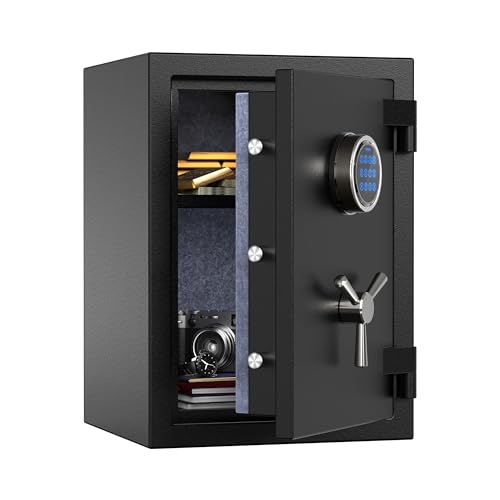
If you want the hardest safe to break into, consider high-security models made from thick steel, ideally with a gauge of 10 or lower. Look for advanced locking mechanisms, like UL-rated electronic or high-security mechanical locks, along with features such as hardened steel plates and multiple locking bolts. These elements greatly increase protection against cutting and prying. There’s more to explore about safe features that enhance security, so keep an eye on additional insights.
Key Takeaways
- High-security safes with thicker steel, ideally 10 gauge or lower, provide significant resistance against cutting and prying attacks.
- Advanced locking mechanisms, like UL-rated electronic and high-security mechanical locks, enhance protection against unauthorized access.
- Safes featuring multiple locking bolts, with some having up to 16 active bolts, offer superior security against tampering.
- Biometric safes utilize fingerprint recognition, ensuring unique user identification and quick access while preventing unauthorized entry.
- Securing a safe to the floor or wall and discreet installation further deters burglars from attempting to break in.
Understanding Different Types of Safes
When considering the security of your valuables, it’s essential to understand the different types of safes available.
Gun safe security hinges on factors like steel thickness and locking mechanisms. High-end models, such as the Fort Knox Legend 7261, utilize advanced security features, making them resistant to prying and drilling.
Combination locks offer secure access, while biometric safes provide cutting-edge protection with fingerprint recognition.
Opting for high-quality locks and bolting your safe to the floor adds layers of security.
The Security Features of High-Security Safes
High-security safes are designed with an array of features that greatly enhance their resistance to unauthorized access.
They often use thicker steel, with gauges as low as 7, offering significant protection against cutting and prying. Advanced locking mechanisms, including UL-rated electronic locks and high-security mechanical locks, guarantee tamper resistance.
Many models incorporate hardened steel plates and internal relocking devices that activate during tampering. Additionally, robust security is achieved through multiple locking bolts, with some safes featuring up to 16 active bolts.
With fire ratings ranging from 30 minutes to over 2 hours, these safes also safeguard contents from fire damage.
Evaluating Biometric Safes and Their Advantages
How effective are biometric safes in enhancing security while providing quick access? Biometric safes utilize advanced fingerprint recognition technology, making unauthorized access considerably more difficult. With fast access times of under a second, they’re ideal during emergencies. These safes can store multiple fingerprints, allowing several authorized users seamless entry. Enhanced security features include backup keys and digital locks, protecting against malfunctions. Additionally, models often come with tamper alerts and anti-spoofing measures to thwart unauthorized attempts.
| Feature | Description | Benefit |
|---|---|---|
| Fingerprint Recognition | Unique user identification | Prevents unauthorized access |
| Fast Access Times | Opens in under a second | Quick retrieval in emergencies |
| Multiple Fingerprints | Stores several authorized users’ fingerprints | Convenient access for users |
Comparing Electronic and Mechanical Lock Safes
As you explore your options for securing your valuables, comparing electronic and mechanical lock safes reveals distinct advantages and drawbacks for each type.
Electronic locks offer quick access and multiple user codes, but they require a power source and can be vulnerable to hacking.
In contrast, high-quality mechanical locks boast over one million combinations, presenting a formidable challenge for unauthorized access. Their durable design often includes complex pin tumbler systems, making them hard to break.
Ultimately, your choice should hinge on access frequency and comfort with technology versus traditional security systems, as both types provide varying levels of protection against break-ins.
Tips for Enhancing Safe Security Against Break-Ins
Choosing the right safe is just the beginning of safeguarding your valuables; enhancing its security is equally essential.
Invest in a high-quality safe made from thick steel, ideally with a gauge of 10 or lower, to resist physical attacks.
Investing in a robust safe made from thick steel, with a gauge of 10 or lower, significantly enhances protection against physical threats.
Install it discreetly, like in a closet, to prevent detection by burglars.
Securely bolt the safe to the floor or wall to make it hard to crack or remove.
Opt for advanced locking features, such as UL-rated locks or biometric access, to boost security.
Don’t forget regular maintenance of the locking mechanism to guarantee peak performance and prevent unauthorized entry.