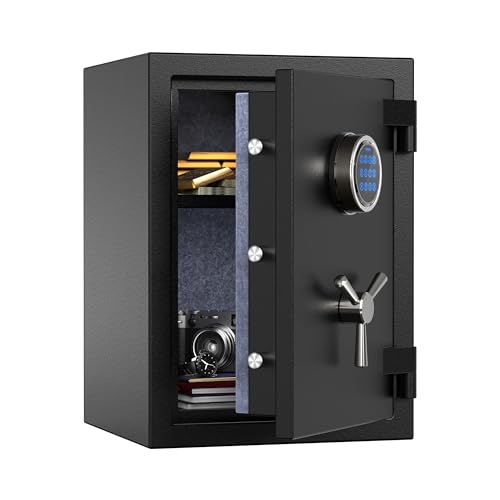
To choose the right size safe for your home, start by evaluating your storage needs. Categorize your valuables—documents, cash, and jewelry—and measure any larger items. Consider how often you’ll access these belongings and plan for future acquisitions. Small safes (under 1 cubic foot) suit cash and jewelry, while medium (1-2 cubic feet) fits documents, and large (2-4 cubic feet) holds extensive collections. Understanding these factors is essential; there’s more to explore about finding the perfect safe for your needs.
Key Takeaways
- Assess your belongings by categorizing important items like documents, jewelry, and cash to determine storage needs.
- Measure the dimensions of your largest items to ensure the safe can accommodate them.
- Choose a safe size slightly larger than current needs to allow for future acquisitions and growth.
- Consider the frequency of access: smaller safes for daily use and larger safes for infrequent access.
- Look for certified fire and burglary protection to ensure the safety of your valuables.
Assessing Your Storage Needs
How do you determine the right size safe for your needs? Start by categorizing your belongings, focusing on important documents, jewelry, and cash.
Measure the dimensions of your largest items to assess storage capacity effectively, using interior size in cubic feet as your guide. Consider your future storage needs; a safe slightly larger than your current requirements can accommodate growth.
Additionally, think about how often you’ll access your items—smaller home safes allow for easier daily use, while larger safes suit infrequent access.
Inventory your belongings to calculate the total space required, ensuring organization and accessibility within the safe.
Understanding Safe Capacity
When selecting a safe, understanding its capacity is essential for effective storage.
Safe capacity is measured in cubic feet, impacting your choice greatly. Consider these factors when choosing the right size for your home safe:
- Small safes (<1 cubic foot) hold few documents and small items.
- Medium safes (1-2 cubic feet) fit larger documents and multiple valuables.
- Large safes (2-4 cubic feet) store numerous documents and larger items.
- Planning for future storage needs can prevent the hassle of multiple safes later, ensuring you can accommodate items like valuable jewelry as your collection grows.
Deciding Between Fire and Burglary Protection
When choosing a safe, it’s vital to weigh your needs for fire and burglary protection.
Fire-resistant safes offer essential defense against high temperatures, while burglary-resistant options emphasize solid construction and theft deterrence.
Understanding the certifications and features of each type will guide you in selecting the most suitable safe for your valuables.
Fire-Resistant Safes Benefits
Fire-resistant safes offer critical protection for your most valuable items, safeguarding them from the devastating effects of heat and flames.
Here are four key benefits to evaluate:
- Fire Ratings: Safes can protect important documents for 30 to 120 minutes, depending on their UL-certified rating.
- Solid Construction: Thicker steel walls enhance fire resistance, providing better protection.
- Water Resistance: Many models guard against water damage from sprinklers or flooding.
- Protection Features: These safes secure family heirlooms and digital media, ensuring they’re safe from irreversible fire damage.
Investing in a fire-resistant safe is essential for preserving your valuables.
Burglary-Resistant Safe Features
Choosing the right safe is essential for securing your valuables, and understanding burglary-resistant safe features can help you make an informed decision. Look for safes with solid construction and pry-resistant doors, as these deter unauthorized access. Check for burglary ratings from Underwriters Laboratories (UL) to gauge protection levels. Opt for models that can be bolted down, greatly reducing theft risks. Higher-quality safes include anti-drill doors and anti-fishing baffles for added security. Remember, heavier safes are less likely to be moved, enhancing burglary resistance.
| Feature | Benefit |
|---|---|
| Solid Construction | Deters unauthorized access |
| Pry-Resistant Doors | Prevents forced entry |
| UL Ratings | Indicates protection level |
| Bolted Down | Reduces theft risk |
| Anti-Drill Doors | Enhances security |
Certification Importance Explained
While evaluating your security needs, it’s important to understand the significance of certifications for both fire and burglary protection.
When choosing a safe, consider the following:
- Look for Underwriters Laboratories (UL) certifications for both fire and burglary protection.
- Verify fire safes can withstand high temperatures for specific durations.
- Check for security features like pry-resistant doors in burglary safes.
- Consider options that can be bolted down for added security.
Your primary concern should guide your choice: fire protection for documents or burglary protection for valuables.
Prioritize certified safes to guarantee the best protection for your belongings.
Considering Additional Features and Accessories
As you evaluate your safe options, considering additional features and accessories can greatly enhance both security and usability.
A safe provides essential protection, but features like mechanical combinations or digital keypads can balance convenience with security features.
Evaluate water-resistant safes for flood-prone areas, and assess your storage needs to determine if organizational accessories like shelves and compartments will improve access.
Look for safes with fire resistance certifications from recognized organizations to guarantee your valuables are adequately protected.
Determining the Right Size Safe for Your Needs
To determine the right size safe for your needs, start by evaluating what you currently need to store and how much space those items require.
Consider future acquisitions to guarantee your safe can accommodate additional valuables without feeling cramped.
Use precise measurements to calculate the necessary dimensions, focusing on the interior space to achieve ideal organization and accessibility.
Assess Storage Requirements
When determining the right size safe for your needs, it’s essential to first categorize your belongings by size and quantity.
Consider these factors to assess your storage requirements:
- Measure your most valuable items like documents, jewelry, and firearms.
- Calculate the total space needed for easy access and organization.
- Prioritize interior dimensions to guarantee proper safe capacity.
- Choose a safe that’s slightly larger than your current needs for future acquisitions.
For few items, small safes (under 1 cubic foot) work well, while larger safes (2 to 4 cubic feet) are better for numerous documents and larger valuables.
Future Storage Considerations
While considering the right size safe, you should factor in not just your current valuables but also any potential future acquisitions. To guarantee adequate future storage, select a safe that’s 10-20% larger than your current inventory.
Assess the dimensions of your items across various categories to calculate the space required for efficient organization. Small safes may suffice for limited documents, but medium to large safes are necessary for larger items or extensive collections.
Regularly updating your inventory helps you determine if your safe size remains suitable, accommodating your evolving collection without overcrowding.
Space Calculation Methods
Selecting the right size safe requires a systematic approach to space calculation. Here are four essential steps to guide you:
- Inventory Items: Categorize your belongings by size and quantity to estimate required space.
- Measure Dimensions: Accurately measure each item, ensuring you account for documents and valuables.
- Focus on Interior Dimensions: Evaluate safes based on their interior dimensions since capacity is measured in cubic feet.
- Plan for Growth: Choose a safe that can accommodate future acquisitions, considering your specific storage needs for ideal organization.
Using these space calculation methods will help you find the perfect safe for your needs.
Safe Size Recommendations
Choosing the right size safe is crucial for effectively protecting your valuables and important documents.
For small items like jewelry and cash, small safes under 1 cubic foot work best. If you need to store larger documents and moderate quantities of valuables, consider medium safes ranging from 1 to 2 cubic feet.
For extensive collections or family heirlooms, large safes measuring 2 to 4 cubic feet provide ample storage.
Always focus on the interior dimensions when evaluating capacity, and opt for a safe slightly larger than your current requirements to guarantee adequate protection against theft as your needs grow.
Future Planning
As your life changes, so do your storage needs, making future planning essential when purchasing a safe.
Consider these factors:
- Anticipate future acquisitions of valuables to avoid needing additional safes.
- Family growth may require securing more important documents and valuables.
- Choose a safe that’s slightly larger than your current needs for flexibility.
- Assess potential increased inventory, including heirlooms and critical paperwork.