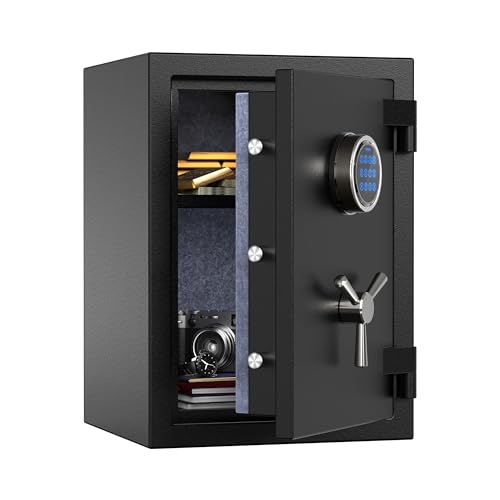
A vault’s superior security stems from its reinforced construction, advanced locking mechanisms, and significant fire and water resistance. With walls exceeding 12 inches thick and specialized locking systems, vaults are designed to thwart unauthorized access. They also integrate advanced thermal seals that protect against extreme heat and smoke. In contrast, safes are typically smaller and less secure, sacrificing protection for accessibility. Explore further to uncover more critical differences between vaults and safes for asset protection.
Key Takeaways
- Vaults have reinforced walls and heavy steel construction, providing superior structural integrity compared to standard safes.
- Advanced locking mechanisms in vaults, including biometric readers and time locks, enhance security beyond what safes offer.
- Vaults are permanently integrated into buildings, making them significantly more resistant to theft and tampering than movable safes.
- Dual-activated thermal seals in vaults improve fire protection, allowing them to withstand extreme heat and flooding better than safes.
- Vaults provide increased storage capacity and can be customized for specific needs, while safes have limited sizes and accessibility features.
Understanding Vaults and Safes
When it comes to securing valuable items, understanding the differences between vaults and safes is essential.
Vaults offer superior security due to their reinforced walls and heavy steel construction, designed to withstand extreme force. In contrast, safes generally use welded steel with thinner walls, making them more susceptible to unauthorized access.
Additionally, vaults are permanently integrated into a building’s structure, enhancing their immovability and resistance to theft. Their fire protection features, including thermal seals, surpass those of most safes, which typically provide limited fire resistance.
Ultimately, choosing between vaults and safes depends on your specific security needs for valuable items.
Construction and Materials
When comparing vaults and safes, the construction and materials used are critical factors.
You’ll notice that vaults employ reinforced wall construction and advanced locking mechanisms, making them far more secure.
Additionally, their fire and water resistance features offer protection that standard safes simply can’t match.
Reinforced Wall Construction
Reinforced wall construction is a critical element that distinguishes vaults from standard safes, providing unparalleled protection against unauthorized access and physical attacks.
The security of a vault relies on several key aspects:
- Thick walls, often exceeding 12 inches, form a formidable barrier.
- Reinforced concrete and heavy steel plates enhance structural integrity.
- Advanced construction techniques, like rebar reinforcement, resist extreme forces.
- Dual-activated thermal seals offer superior fire protection.
These features guarantee valuable assets remain secure, making vaults a superior choice for those prioritizing robust protection and long-term security against various threats.
Advanced Locking Mechanisms
Advanced locking mechanisms play an essential role in defining the security of vaults compared to standard safes, as they integrate sophisticated technologies that enhance protection against unauthorized access. Vault doors typically feature complex locking systems like time locks and biometric readers, designed to withstand expert-level attempts. These mechanisms, combined with reinforced concrete and heavy steel frameworks, provide higher security levels that standard safes can’t match.
| Feature | Vaults |
|---|---|
| Locking Mechanisms | Advanced, complex systems |
| Door Thickness | Up to 1 inch steel |
| Construction Material | Reinforced concrete |
| Security Rating | Higher UL ratings |
Fire and Water Resistance
Although safes offer some level of fire and water resistance, vaults excel in these critical areas due to their robust construction and superior materials.
Here’s how vaults provide enhanced protection:
- Built with thick reinforced concrete and heavy steel plates, vaults guarantee superior fire resistance.
- Concrete walls withstand high temperatures longer, protecting contents from heat.
- Advanced thermal seals in vault doors block smoke and flames effectively.
- Vaults can endure flooding scenarios better, markedly reducing water damage risk.
Security Features and Ratings
How do security features and ratings differentiate vaults from standard safes?
Vaults boast enhanced security due to thick walls made of reinforced concrete and heavy steel plates, far surpassing the materials used in typical safes.
The locking mechanisms in vaults often include advanced options like time locks and biometric access, which resist sophisticated breaches more effectively than simpler locks found in safes.
Additionally, vaults achieve UL vault ratings, certifying their ability to withstand extreme force and skilled attacks.
Their fire-resistant features, including dual activated thermal seals, provide superior protection against heat and smoke compared to the basic fireproofing offered by safes.
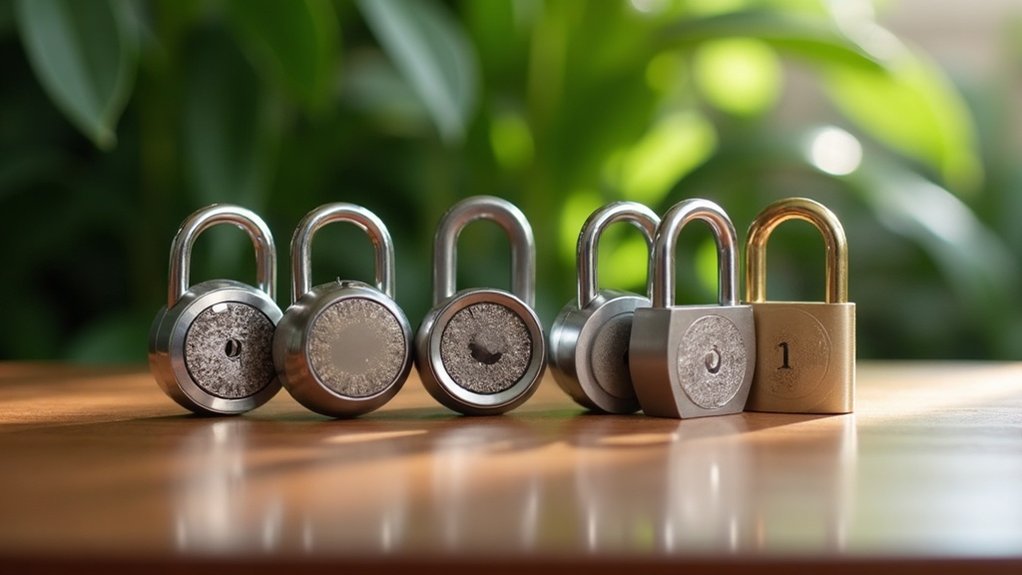
Locking Mechanisms
When evaluating locking mechanisms, you’ll find that vaults employ advanced systems designed to thwart unauthorized access effectively.
These mechanisms often include dual security features, such as biometric authentication and multiple locking points, which greatly enhance their resilience.
In contrast to standard safes, the robust construction and complexity of vault locks provide a higher level of protection against tampering and brute force attacks.
Advanced Locking Systems
As security concerns grow, understanding advanced locking systems becomes essential for anyone considering a vault over a standard safe.
Vaults employ:
- Advanced locking mechanisms like biometric scanners for higher resistance against unauthorized access.
- Dual control locks that require two separate actions to enhance security, preventing single-person access.
- Electronic locking systems programmed to restrict access during specific times, adding another security layer.
- Thicker steel plates and reinforced locking bolts, making vault doors considerably more secure than standard safe doors.
Additionally, integrated alarm systems provide real-time alerts, ensuring you’re always aware of potential breaches.
Dual Security Features
While traditional safes often rely on simpler locking methods, vaults integrate dual security features that considerably enhance their protective capabilities.
These vaults employ dual locking systems, requiring both mechanisms to be activated for access. This considerably elevates security levels compared to standard safes.
Constructed with thicker steel plates, typically up to an inch, vaults resist forced entry far better than safes with thinner materials.
Additionally, advanced locking mechanisms in vaults are designed to be tamper-resistant, often featuring reinforced boltwork.
Many vaults also incorporate alarm systems that activate upon unauthorized access attempts, providing an extra layer of protection not commonly found in safes.
Fire and Water Protection
Understanding the differences in fire and water protection between vaults and safes is essential for anyone considering secure storage options.
Vaults offer superior protection due to:
- Concrete walls with dual activated thermal seals for exceptional fire protection.
- Thick steel doors that resist warping, keeping your valuables safe during fires.
- Fire seals that expand to nine times their size, blocking smoke and flames effectively.
- Larger air volumes that maintain lower temperatures longer, reducing heat exposure.
While both vaults and safes provide fireproof features, vaults deliver considerably higher levels of fire and water damage protection, ensuring high-level security for your valuables.
Size and Capacity Differences
When comparing vaults and safes, size and capacity play a critical role in determining which option best suits your needs. Vaults, typically room-sized or larger, can accommodate a significant volume of valuables, while safes range from small to medium sizes, limiting their storage capacity. The larger capacity of vaults allows for secure storage of bulky items. Additionally, vaults offer customization options to meet specific storage needs, unlike safes with predefined sizes.
| Feature | Vaults | Safes |
|---|---|---|
| Size | Room-sized or larger | Small to medium |
| Capacity | High (thousands of items) | Limited |
| Customization | Yes | No |
Accessibility and Use Cases
How do accessibility and use cases differ between vaults and safes? Vaults are designed for maximum security, often in high-stakes environments, while safes offer more personal accessibility.
Here are four key considerations:
- Vaults feature serious construction with thick concrete and steel, providing a formidable barrier.
- Safes, being movable, can be tampered with, reducing their overall security.
- Vaults are utilized in banks and casinos to store valuable things securely.
- Safes serve personal needs, allowing easy access but compromising on the security you require.
Understanding these differences helps you determine what best meets your need to protect your assets.
Cost Considerations
While it may seem tempting to opt for a safe due to its lower upfront costs, investing in a vault often proves to be a more prudent choice for those needing robust security.
Vaults incur costs associated with reinforced concrete, heavy steel plating, and intricate locking mechanisms. Unlike affordable safes, vaults are tailored for high-security environments, justifying their higher price tag.
When budgeting, it’s wise to allocate around 10% of your valuable assets’ worth for vault protection, reflecting its status as a significant investment.
In contrast, safes offer varying security levels but may not withstand extreme threats as effectively as vaults.