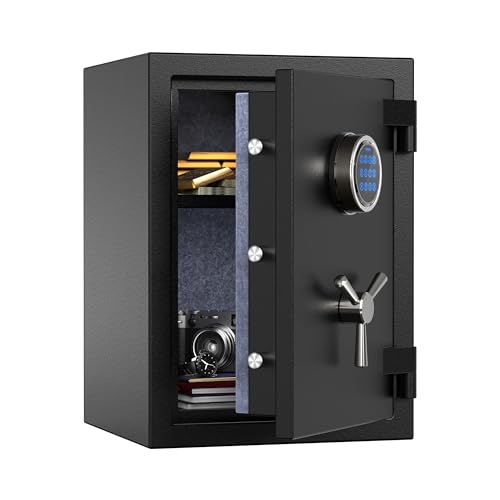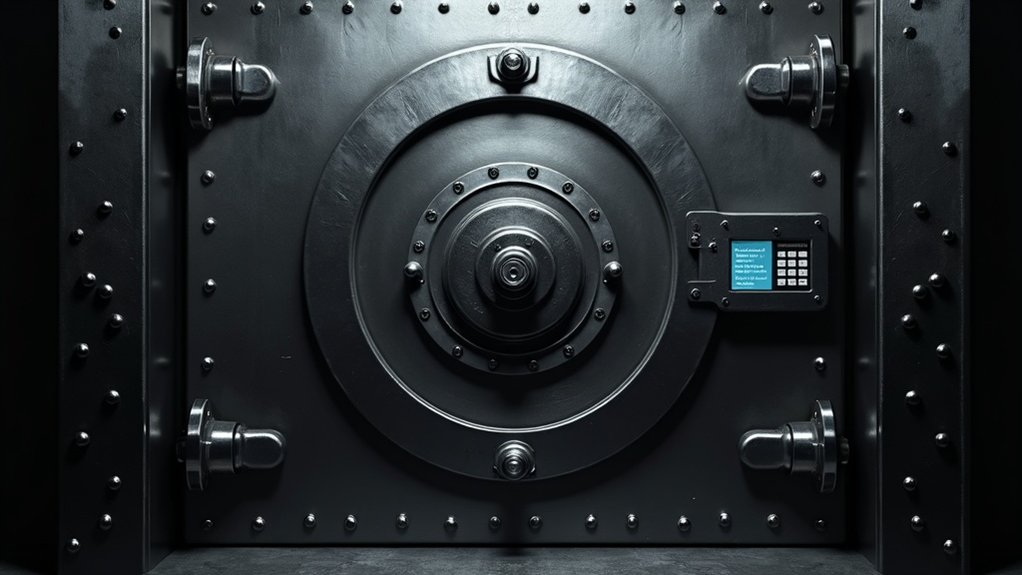
A secure vault door relies on thick steel construction, typically at least 1/4 inch, to resist forced entry. Advanced locking mechanisms, including biometric access and multiple bolts, further enhance security against tampering. Fire protection is vital as well, adhering to standards that guarantee it withstands high temperatures. Professional installation guarantees proper fit and function, while regular maintenance keeps it in top condition. Understanding these elements will give you a deeper insight into vault security systems.
Key Takeaways
- Thick steel construction, ideally 1/4 inch or more, enhances resistance to forced entry and impact attacks.
- Robust locking mechanisms, including mechanical and electronic options, provide reliability and deter unauthorized access.
- Compliance with UL 72 fire resistance standards ensures protection against high temperatures and fire damage.
- Professional installation and regular maintenance are crucial for maximizing security and identifying vulnerabilities.
- Customization options, like ballistic armor and advanced locking systems, significantly improve security against tampering and forced entry.
Key Features of a Secure Vault Door
When considering the security of a vault door, several key features stand out as essential for ideal protection.
High-quality vault doors typically incorporate thick steel construction, with a minimum of 1/4 inch thickness, enhancing resistance against forced entry.
Robust locking mechanisms, including hardened steel bolts and advanced systems like biometric authentication, are important for preventing unauthorized access.
Additionally, effective fire protection is significant; look for doors with fire-rated insulation and expandable seals that meet UL 72 standards.
Finally, guarantee professional installation and commit to regular maintenance to uphold the integrity of these critical security features.
Importance of Thick Steel Construction
Thick steel construction is essential for enhancing a vault door’s resistance to attacks and preventing tampering.
With a minimum thickness of 1/4 inch, the door can effectively withstand significant force and deter unauthorized access.
Additionally, thicker steel provides improved fire protection, ensuring that your valuables remain secure under various threats.
Enhanced Resistance to Attacks
Effective vault door security hinges on the construction materials used, particularly the thickness of the steel. Thick steel, ideally at least 1/4 inch, is essential for resisting tampering and forced entry.
High-security vault doors often feature multi-layered steel, sometimes up to 1/2 inch thick, enhancing strength against advanced burglary techniques. Robust door thickness not only deters break-ins but also improves fire resistance, delaying heat penetration.
Additionally, military-style locking bars, crafted from a single piece of steel, bolster security by preventing prying. Extensive security measures, including hardened steel locking bolts, play a critical role in mitigating various attack methods effectively.
Effective Tampering Prevention
While many factors contribute to vault door security, the importance of thick steel construction can’t be overstated.
For effective tampering prevention, consider these key elements:
- A minimum thickness of 1/4 inch solid steel greatly resists forced entry.
- Military-style locking bars enhance structural integrity, preventing prying or impact attacks.
- The combination of heavy-duty locking bolts and advanced locking mechanisms creates a formidable barrier against unauthorized access.
Improved Fire Protection
The robust construction of vault doors not only fortifies against unauthorized access but also significantly boosts fire protection capabilities. Thick steel, typically at least 1/4 inch, considerably delays heat penetration during a fire, preserving the integrity of your valuables.
Coupled with an insulation layer, often made from fire-rated gypsum board, this design guarantees maximum heat resistance. Quality vault doors also feature advanced fire seals, like those made from Palusol, which expand under heat to block smoke and flames.
With military-style locking bars, these doors address both security needs and fire-related threats, boasting fire ratings up to 90 minutes at temperatures reaching 1700°F.
Advanced Locking Mechanisms
When securing a vault, you’ve got options in advanced locking mechanisms that cater to different security needs.
Mechanical locking systems provide time-tested reliability, while electronic locking technologies offer flexibility and enhanced access control.
Additionally, biometric authentication methods further tighten security by ensuring only authorized personnel can gain entry.
Mechanical Locking Systems
Mechanical locking systems offer robust security through advanced locking mechanisms that employ intricate combinations of gears and levers.
These systems provide a high level of security against unauthorized access, featuring:
- Hardened steel components that resist drilling and tampering
- Multiple locking bolts that engage simultaneously for enhanced security
- Reliability in emergencies, as they require no power source
These attributes considerably increase the difficulty of forced entry, ensuring your valuables remain protected.
Mechanical locks are often rigorously tested by standards like UL, further validating their effectiveness against various attack methods.
Trust in their durability and reliability to safeguard your critical assets.
Electronic Locking Technologies
Expanding on the security landscape, electronic locking technologies introduce a new level of sophistication in vault protection.
These systems often feature biometric authentication, enhancing security through fingerprint recognition. Keypad access allows you to enter unique codes, which can be changed regularly for added safety.
High-end models incorporate audit trails, logging all access attempts for accountability. Furthermore, remote access capabilities enable you to control vault doors from afar via mobile devices or secure connections.
Additionally, tamper-proof designs trigger alarms or lockouts after incorrect entries, greatly increasing resistance to forced entry, ensuring your vault remains secure and monitored.
Biometric Authentication Methods
In today’s security landscape, biometric authentication methods have emerged as a formidable line of defense for vault doors.
These advanced locking mechanisms greatly reduce unauthorized entry risks by using unique physical traits.
Key features include:
- Multi-factor authentication, combining biometrics with PIN codes or keycards for added security.
- Flexible access control, allowing multiple user profiles while ensuring only registered individuals open the door.
- Real-time access logs for enhanced security audits, tracking who accessed the vault and when.
Fire Protection Standards
Fire protection standards are critical for ensuring the safety of valuable contents stored within vaults.
A quality vault door must meet UL 72 fire resistance standards, which evaluate its capability to shield contents from extreme heat and flames. It should feature a fire-rated insulation layer, like gypsum board, enhancing heat resistance and delaying temperature rises.
The fire seal, often made from Palusol, expands under heat, blocking smoke and flames to further protect your items. High-quality doors can withstand temperatures of 1700°F for up to 90 minutes, keeping internal temperatures below the flash point of paper, thereby safeguarding your valuable items.
Professional Installation Considerations
While fire protection standards guarantee your vault’s contents remain safe from flames, the effectiveness of a vault door also hinges greatly on professional installation.
Proper installation is essential to maximize security and prevent vulnerabilities. Key considerations include:
Proper installation is crucial for ensuring maximum security and minimizing vulnerabilities in vault doors.
- Confirming surrounding infrastructure is reinforced with thicker steel and concrete.
- Complying with local building codes to avoid legal issues.
- Utilizing adjustable door frames to accommodate varying wall thicknesses.
A well-installed vault door functions as a secure barrier, greatly enhancing your safety.
Ongoing Maintenance and Inspection
Regular maintenance and inspections are essential for guaranteeing your vault door remains secure and functional over time.
Conducting inspections at least twice a year helps verify the locking mechanisms and structural integrity. Early detection of minor issues like rust or misalignment can prevent significant problems and costly repairs.
Utilizing professional maintenance services guarantees compliance with local building codes and maintains warranty conditions.
Additionally, keeping a detailed log of maintenance activities and inspections allows you to track the vault door’s condition over time and provides a necessary record for insurance purposes, ultimately enhancing the overall security of your facility.
Customization Options for Enhanced Security
Maintaining your vault door’s integrity through inspections is just one aspect of guaranteeing robust security; customization plays an essential role in enhancing overall protection.
Ensuring your vault door’s integrity through regular inspections is crucial, but customization significantly boosts its security capabilities.
You can tailor your vault door with various features, including:
- Thicker steel options, ranging from 1/4 inch to 1 inch, to resist tampering.
- Advanced locking mechanisms like biometric authentication for secure access control.
- Fire protection features, including fire-rated insulation and expandable fire seals.
Additionally, the interlocking door design and ballistic armor layers greatly improve defense against forced entry and attacks.
These customization options confirm your vault door meets your specific security needs effectively.