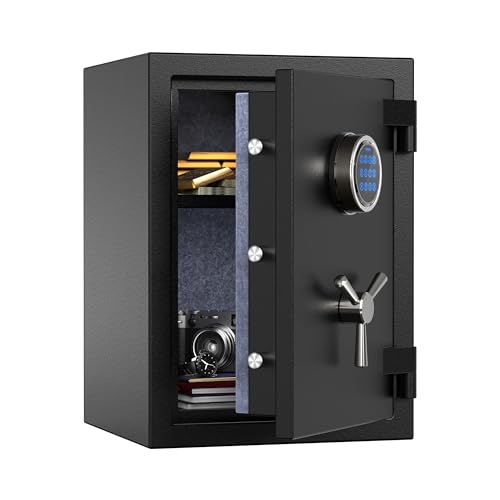
A safe is labeled waterproof when it meets specific resistance standards, often verified by ETL certification. This certification indicates that the safe can endure certain depths and durations of water exposure, ensuring your valuables remain protected during flooding events. However, many so-called waterproof safes may only offer limited water resistance. To fully understand a safe’s capabilities, it’s essential to assess the manufacturer’s specifications and inherent limitations. Continue to explore more about waterproof safes and their features.
Key Takeaways
- Waterproof safes are often rated based on ETL certification, indicating their ability to withstand specific water exposures.
- Effective seals and materials contribute to a safe’s waterproof capabilities, minimizing water ingress during flooding events.
- The distinction between “waterproof” and “water-resistant” is crucial, as many safes labeled waterproof may only offer limited protection.
- Manufacturer specifications detail the duration and depth a safe can endure, guiding consumers on its actual waterproof capacity.
- Understanding the limitations of waterproof safes is essential to ensure preparedness for unexpected water exposure scenarios.
Understanding Waterproof Ratings in Safes
When selecting a safe, understanding waterproof ratings is crucial, as it directly impacts the protection of your valuables during emergencies.
Waterproof ratings, often verified by ETL certification, specify the duration and depth a safe can withstand water exposure without allowing moisture in. In contrast, a water-resistant safe can only endure limited submersion, often misrepresented by misleading waterproof claims.
Always review the manufacturer’s specifications, as exceeding the certified limits can compromise protection. Remember, no safe is entirely waterproof; all can eventually allow water in under extreme conditions.
Prioritize standardized testing results to guarantee adequate defense against varying moisture levels.
Key Features of Waterproof Safes
When evaluating waterproof safes, understanding ETL certification and water resistance ratings is essential.
ETL certification guarantees that the safe can withstand specific water exposure conditions, while water resistance ratings indicate the duration and depth it can endure.
These features make certain that your valuables remain protected during unexpected flooding events.
ETL Certification Importance
Understanding the significance of ETL certification is essential if you’re considering a waterproof safe, as it serves as a benchmark for quality and reliability.
ETL certification indicates that a safe has undergone rigorous testing for water protection, ensuring its performance under water exposure conditions. Safes with this certification display clear water resistance ratings, detailing how long they can resist water at specific depths.
This credibility is important, as it verifies the manufacturer’s waterproofing claims against established standards. Without ETL or similar certifications, you may question the reliability of a safe’s claims, making informed decisions critical for your purchase.
Water Resistance Ratings
Water resistance ratings are essential metrics that help you assess the effectiveness of a waterproof safe.
A rated safe’s ability to withstand water damage varies; terminology like “waterproof” suggests complete imperviousness, while “water-resistant” indicates limited protection.
ETL certified safes have been rigorously tested for specific conditions, such as enduring 39 inches of water for up to 72 hours.
However, remember that a safe’s water resistance can diminish due to environmental risks, such as prolonged flooding or excessive submersion beyond its rated capacity.
Always verify the manufacturer’s claims to guarantee your choice meets your safety needs.
The Role of ETL Certification
While many consumers may overlook certification labels, ETL certification plays a pivotal role in ensuring that safes provide reliable water protection. This certification verifies a safe’s water resistance through rigorous testing, confirming that it can withstand specific time durations and water depths without moisture ingress. Safes displaying ETL certification assure you that they meet stringent requirements, providing consumer confidence in their claims.
| Feature | ETL Certified | Non-Certified |
|---|---|---|
| Water Resistance | Verified Performance | Unverified Claims |
| Moisture Ingress | Prevented | Possible |
| Consumer Confidence | High | Low |
Water Resistance vs. Waterproof Claims
When evaluating safes, it’s important to distinguish between “waterproof” and “water-resistant” claims, as they represent different levels of protection.
“Waterproof” suggests complete invulnerability to water, a claim that’s often misleading, whereas “water-resistant” indicates a safe’s ability to endure limited submersion for specific durations.
Waterproof implies total protection from water, which can be misleading; water-resistant means limited submersion capability for specific times.
Consider these key factors:
- ETL-certified water resistance offers reliable protection against water ingress.
- The depth and duration of water resistance vary by model; verify these specifications.
- Verify proper placement of your safe to enhance its level of protection against potential water exposure.
Making an informed decision is vital for your insurance policy.
Limitations of Waterproof Safes
Although many safes advertise themselves as “waterproof,” their actual performance often falls short of the claims. Most are merely water-resistant, allowing moisture ingress if submerged for extended amounts of time.
The limitations of waterproof safes stem from the challenge of achieving effective seals without compromising fire resistance or security features. Moreover, the lack of standardized testing for waterproof certifications leaves consumers questioning credibility.
In flood conditions, even supposedly waterproof models may fail, risking damage to your valuables. It’s essential to understand these limitations before relying on a safe’s water protection claims, ensuring you’re adequately prepared for potential risks.
Best Practices for Enhancing Water Protection
Understanding the limitations of waterproof safes is vital for safeguarding your valuables. To enhance water protection, follow these best practices:
- Elevate the safe on a pedestal to minimize water ingress during flooding.
- Use waterproof containers inside the safe for added moisture protection.
- Regularly inspect the seal around the door to verify it’s intact, preventing water entry.
Additionally, place the safe in a location less prone to flooding and incorporate desiccants to control humidity.
These measures not only protect against water but also shield against high temperatures and potential rust, guaranteeing your valuables remain safe.