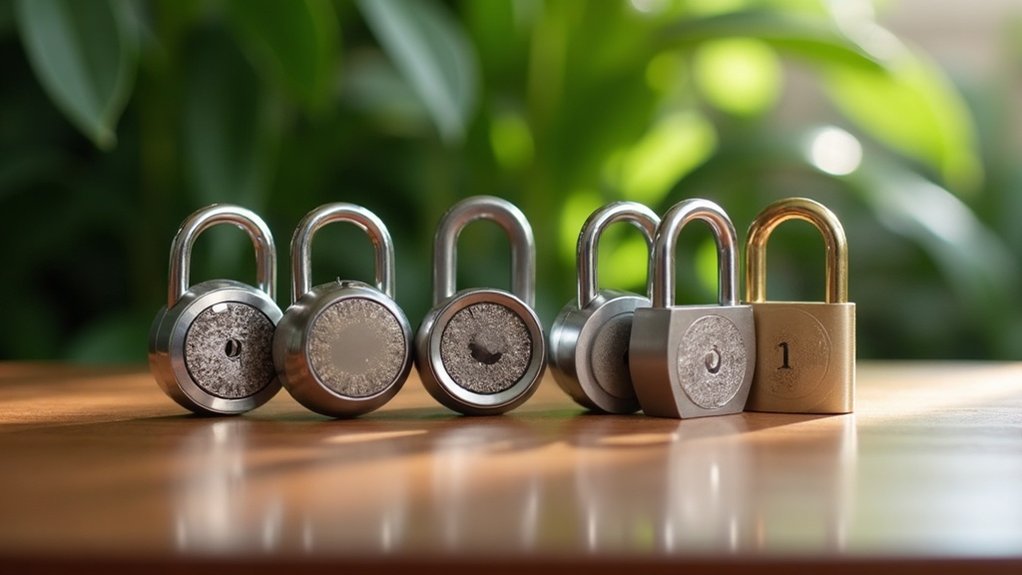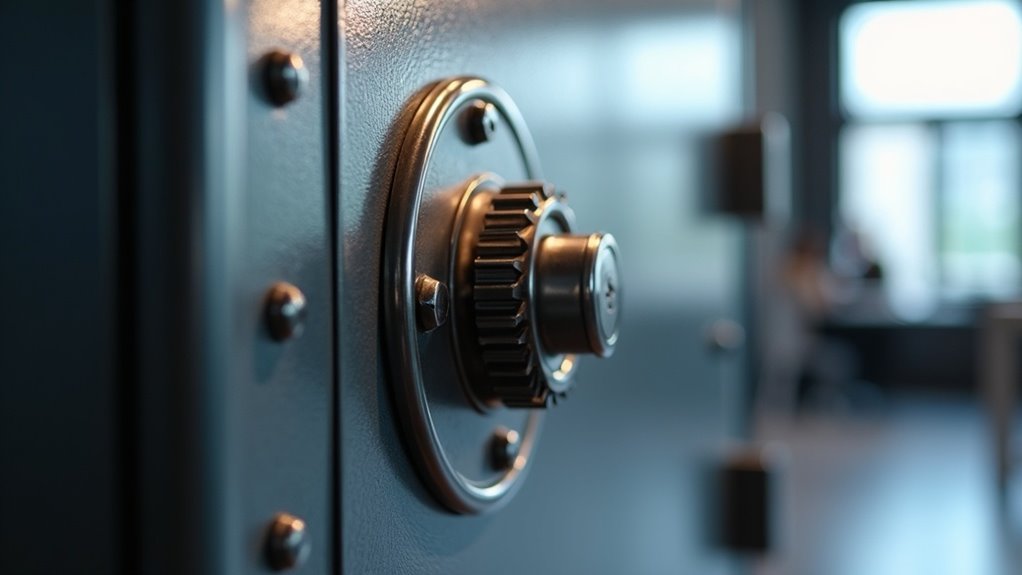
A safe’s pry resistance hinges on its construction, materials, and locking mechanisms. Thick steel, often 10-gauge or 12-gauge, greatly boosts durability, while reinforced doors and overlapping seams thwart pry attacks. Multi-directional locking bolts create challenges for intruders by complicating leverage. Additionally, proper installation enhances stability, further deterring unauthorized access. The combination of these features forms a robust security system. Discover how specific installations and additional features can further enhance your safe’s defenses.
Key Takeaways
- Thick steel construction, typically 10-gauge or 12-gauge, enhances durability and resistance to pry attacks.
- Reinforced doors with overlapping seams and hinges minimize weak points and complicate pry attempts.
- Multi-directional locking bolts distribute force, making it harder for intruders to gain leverage.
- Anti-drill plates and advanced locking mechanisms protect against tampering and forced entry.
- Proper installation, including bolting to the floor, increases stability and deters unauthorized access.
Understanding Pry Resistance in Safes
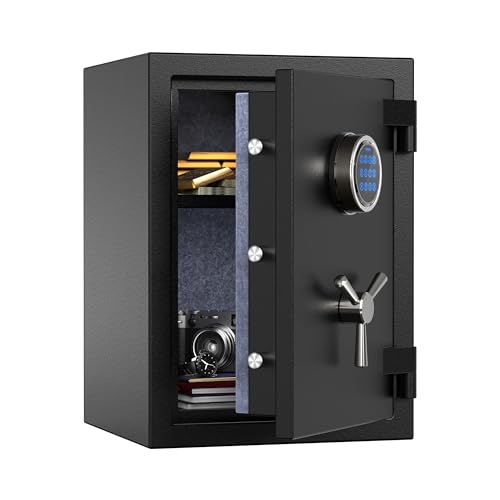
Pry resistance is a critical factor in safe design, primarily serving as a defense against unauthorized access. To achieve this, quality safes utilize thick steel, often 10-gauge or 12-gauge, creating a formidable barrier against prying tools.
Security features like reinforced doors with overlapping seams and multi-directional locking bolts enhance resistance, making it difficult for intruders to gain leverage. Additionally, the strength of the locking mechanism plays an essential role, with advanced locks activating upon tampering.
Proper installation, such as being bolted to the floor, further improves pry resistance, securing the safe in place and thwarting theft attempts effectively.
Key Features of Pry-Resistant Safes
When choosing a pry-resistant safe, you’ll want to focus on its thick steel construction and reinforced locking mechanisms.
A safe with 10-gauge or 12-gauge steel body greatly increases resistance to prying attempts, while advanced locking systems provide multiple points of security.
Together, these features create a formidable barrier against unauthorized access, ensuring your valuables remain protected.
Thick Steel Construction
Thick steel construction is a cornerstone of pry-resistant safes, providing a formidable barrier against unauthorized access. By utilizing 10-gauge or 12-gauge materials, these safes guarantee solid steel protection against theft. Their reinforced doors feature overlapping joints and uni-body construction, minimizing weak points.
| Feature | Benefit |
|---|---|
| Thick Steel | Resists prying tools effectively |
| Reinforced Doors | Enhances security against force |
| Overlapping Joints | Eliminates weak spots |
| Uni-body Construction | Provides overall structural integrity |
| Advanced Locking | Increases time needed for breaches |
This combination considerably boosts security and peace of mind.
Reinforced Locking Mechanisms
While many factors contribute to the overall security of a safe, reinforced locking mechanisms play an essential role in deterring unauthorized access.
High-quality safes feature reinforced doors with overlapping joints, which prevent tools from gaining leverage during prying attacks. Multiple locking points distribute force across the door, enhancing resistance.
Advanced locking mechanisms, like dual systems or deadbolts, require multiple engagement points, increasing security. Additionally, relocker systems automatically engage hidden locks upon tampering, adding another layer of protection.
The use of hardened steel plates in these locking areas not only guards against drilling but also strengthens the safe against prying efforts.
Role of Material Thickness in Security
When choosing a safe, the thickness of the steel plays a critical role in its ability to resist pry attacks.
A lower gauge number indicates a thicker material, which greatly enhances security by making forced entry more difficult.
Understanding how steel gauge and thickness impact a safe’s overall durability can help you make a more informed decision.
Steel Gauge Significance
Steel gauge plays a critical role in the security of safes, directly impacting their ability to resist prying attacks. The thickness of the steel determines how well a safe can withstand forceful attempts, with thicker steel construction providing superior pry resistance. When selecting a safe, consider the following comparisons:
| Steel Gauge | Thickness (Inches) | Pry Resistance Level |
|---|---|---|
| 10 | 1/8 | High |
| 12 | 1/16 | Moderate |
| 14 | 1/16 | Low |
| 16 | 1/16 | Very Low |
| 18 | 1/20 | Minimal |
Safes made from thicker materials offer enhanced protection for your valuables.
Impact of Thickness
The thickness of a safe’s material is a key factor in determining its overall security, particularly against prying attacks. A robust steel construction enhances pry resistance considerably, ensuring better protection for your valuables.
Consider the following aspects of thickness:
- Thicker steel (7-gauge to 10-gauge) resists deformation during prying attempts.
- It minimizes gaps that pry tools can exploit.
- Increased weight deters thieves from relocating the safe.
- Higher thickness levels improve resistance to other attack methods.
- A thicker door and body extend the time needed for a successful break-in.
Investing in thicker materials greatly enhances your safe’s security.
Importance of Locking Mechanisms
Although you may not think about it often, effective locking mechanisms play an essential role in safeguarding your valuables from unauthorized access. High-quality locks greatly increase the difficulty of tampering and forced entry.
Advanced locking systems, including biometric and electronic options, offer enhanced security features like anti-tampering technology that activates additional protection during unauthorized attempts. Re-locker systems further engage hidden locks if the primary lock is compromised, adding an extra layer of defense.
Additionally, using hardened steel plates around locks protects against drilling and punch attacks. Opting for UL-listed mechanical locks guarantees your safe meets recognized security standards for maximum confidence.
Reinforced Door Design and Construction
When securing your valuables, the design and construction of the safe’s door play an essential role in resisting pry attacks.
A reinforced door design typically features:
- Heavy steel construction, often 10-gauge or thicker
- Overlapping joints to minimize gaps
- Locking bolts, usually 1.5 inches in diameter, securing multiple points
- A pry-resistant lip around the frame for added protection
- Advanced locking mechanisms with relocker systems for enhanced security
These elements work together to create a formidable barrier, making it considerably harder for intruders to exploit weaknesses and gain unauthorized access to your belongings.
Choose wisely for best protection.
Installation Techniques for Enhanced Security
Effective installation techniques are essential for maximizing the security of your safe and ensuring it withstands pry attacks. Start by bolting the safe to the floor and wall using lag bolts or through bolts, anchoring it securely in place.
Positioning the safe in a corner limits access to vulnerable sides, complicating pry bar attacks. Enhance security further by mounting angle iron against the safe, creating an additional barrier.
Secure bolt heads with heavy epoxy to prevent removal, and use backer plates when bolting to distribute stress and stability. These methods collectively deter intruders and fortify your safe against breaches.
Additional Measures to Deter Burglars
To strengthen your safe’s defenses against burglars, consider implementing a combination of strategic concealment and advanced security measures.
Strengthen your safe’s defenses with strategic concealment and advanced security measures for enhanced protection against burglars.
These additional measures enhance your safe’s resistance and deter potential threats:
- Bolt the safe securely to the floor for stability.
- Use heavy bolts with backing plates to prevent easy removal.
- Install angle iron to reinforce the safe against pry bar attacks.
- Conceal the safe behind furniture or in a false wall.
- Upgrade security features with alarms and surveillance cameras.
With these features that make your safe more secure, securing a large gun or valuables becomes a more effective deterrent against break-ins.