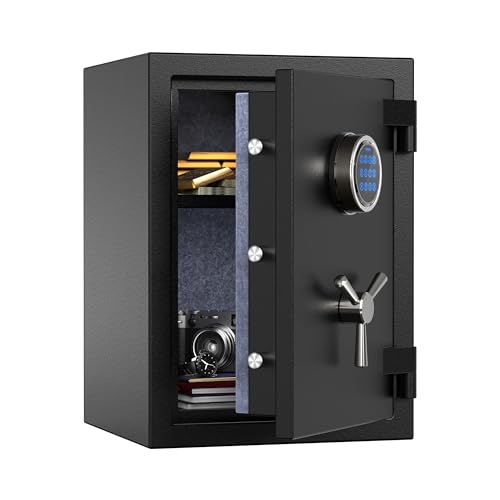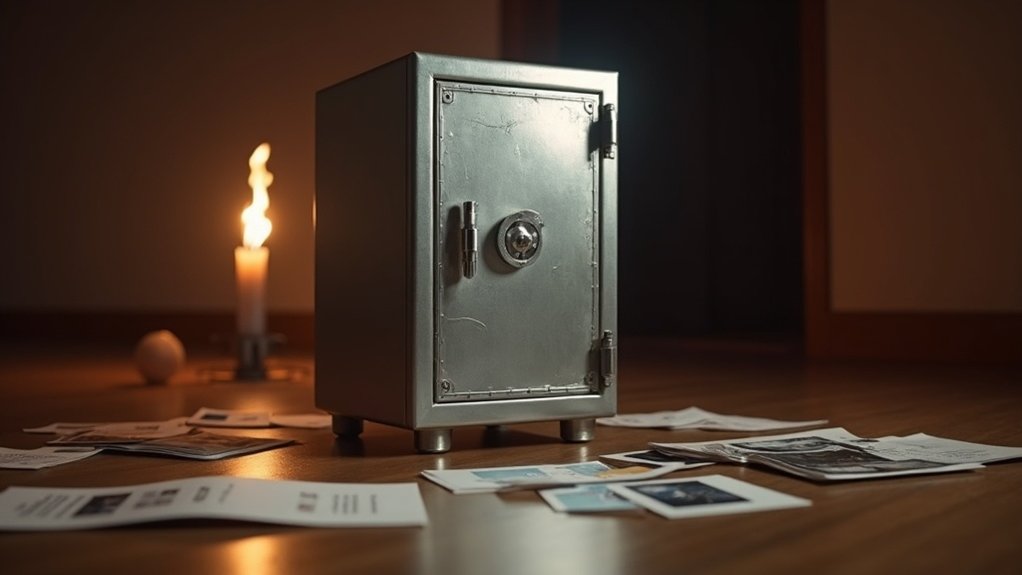
The typical lifespan of a fireproof safe is about 20 to 30 years, influenced by construction quality, maintenance, and environmental conditions. Regular checks can help prevent rust, corrosion, and insulation degradation, extending your safe’s life. If it’s over 20 to 30 years old or shows significant damage, you might want to contemplate replacing it. Knowing the signs of wear and the importance of quality can help you make informed decisions on your safe’s longevity and performance.
Key Takeaways
- The recommended lifespan of a fireproof safe is around 20 years, after which it may not meet current safety standards.
- Regular maintenance, including inspections every six months, can prolong the lifespan of a fireproof safe.
- Extensive damage to insulation or structure, or involvement in a significant fire, may necessitate immediate replacement.
- Signs of rust, corrosion, or misaligned hinges indicate that the safe’s integrity may be compromised and should be addressed.
- Upgrading to modern security features can enhance protection and extend the useful life of an aging safe.
Understanding Fireproof Ratings
When selecting a fireproof safe, it’s crucial to understand the various fireproof ratings that indicate its protective capabilities.
Fire ratings like Class 125, Class 150, and Class 350 show how well safes can withstand high temperatures for specific durations. For instance, a KSG 4500 – 60 rating offers 1 hour of protection at 924°C, while KSG 4500 – 120 provides 2 hours at 1010°C.
A minimum fire rating of 1 hour is recommended for home safes to guarantee adequate protection against typical house fires.
Factors Influencing the Lifespan of Fireproof Safes
Although fireproof safes are designed to withstand extreme temperatures, several factors can influence their lifespan. Key aspects include material quality, which affects sturdiness and insulation performance. Environmental conditions, such as humidity and temperature fluctuations, can compromise the safe’s integrity. Regular maintenance, like checking for rust and lubricating moving parts, is essential for prolonging durability. Additionally, frequent use may cause noticeable signs of wear, leading to a shorter lifespan compared to less frequently accessed safes.
| Factor | Influence on Lifespan | Recommendations |
|---|---|---|
| Material Quality | Determines resistance | Choose high-quality materials |
| Environmental Conditions | Affects integrity | Store in stable environments |
| Regular Maintenance | Prolongs durability | Inspect and maintain regularly |
| Usage Frequency | Causes wear | Limit access if possible |
| Signs of Wear | Indicate decline | Address issues promptly |
Maintenance Tips for Longevity
To extend the lifespan of your fireproof safe, you should implement a regular inspection schedule to catch any signs of wear or damage early.
Maintaining proper humidity levels around the safe and ensuring the locks are well-lubricated will also enhance its functionality.
Regular Inspection Schedule
A fireproof safe is an essential investment for protecting your valuables, but its effectiveness hinges on regular maintenance.
Conduct regular inspections at least every six months to identify signs of wear or damage.
Be sure to:
- Check for rust or corrosion around hinges and locks.
- Test the locking mechanism and hinges for smooth operation.
- Inspect the interior for moisture or humidity.
- Assess potential internal damage after any fire or attempted break-in.
These steps will help guarantee your safe remains secure and reliable for years, safeguarding your important items against unexpected events.
Humidity Control Solutions
How can you guarantee the longevity of your fireproof safe amidst varying humidity levels? Implement effective humidity control solutions.
Regularly place desiccant packets or silica gel inside your safe to absorb excess moisture, preventing mold and mildew growth.
Conduct periodic checks on humidity levels in the surrounding environment.
Air out the safe weekly for at least 30 minutes to let trapped humidity escape.
In areas prone to moisture, use a dehumidifier to maintain ideal conditions.
Finally, avoid placing your safe in high-humidity locations, such as basements or near water sources, to enhance its longevity and preserve its fireproof capabilities.
Proper Lock Maintenance
Maintaining the integrity of your fireproof safe hinges considerably on proper lock maintenance. Regular attention to the lock not only guarantees security but also helps protect your valuables.
Follow these tips for ideal performance:
- Use a silicone-based lubricant on the locking mechanism and hinges.
- Check for wear or damage; address any issues immediately.
- Avoid excessive force when operating the lock to prevent damage.
- Periodically test the locking mechanism by locking and releasing it multiple times.
Signs That Your Fireproof Safe Needs Attention
While fireproof safes are designed to withstand extreme conditions, certain signs can indicate that yours may need attention. Look for rust or corrosion around hinges and locks, as these can signal weakened structural integrity. Additionally, warped doors or misaligned hinges affect security against heat and smoke. If you notice cracking or disintegration of insulation, it compromises the safe’s ability to maintain internal temperature. Finally, outdated security features may require upgrades for ideal protection.
| Sign | Action Needed |
|---|---|
| Rust or corrosion | Inspect and repair |
| Warped doors | Realign or replace hinges |
| Degraded insulation | Replace insulation |
| Outdated locking mechanism | Upgrade to modern standards |
Repair vs. Replace: Making the Right Choice
When deciding whether to repair or replace your fireproof safe, consider the extent of the damage and the safe’s overall performance. Minor issues like sticky locks can typically be repaired, but significant disasters like fires may warrant a replacement.
Take into account:
Consider the safe’s age, sentimental value, and potential for enhanced security features when deciding on repairs or replacement.
- The safe’s age and condition.
- Sentimental value versus structural integrity.
- Potential for enhanced security features in newer models.
- Cost-effectiveness of repairs versus replacement.
Consulting a professional can clarify whether repairs are feasible, ensuring you make the best choice for ideal safety and functionality.
Ultimately, protecting your valuables should be your primary concern.
Importance of Fireproof Safe Quality
The quality of a fireproof safe plays an essential role in determining how well it protects your valuables over time. Investing in a high-quality fireproof and waterproof safe guarantees maximum fire protection, extending its lifespan beyond 20 to 30 years.
The materials and construction directly impact the safe’s level of security against fire exposure. Look for safes with reputable fire ratings, such as UL and KSG 4500, to guarantee enhanced durability.
Regular maintenance is crucial to prevent issues that could compromise effectiveness. Choosing a reliable Safe Manufacturer can provide peace of mind, safeguarding your irreplaceable items for years to come.
Recommended Lifespan and Replacement Guidelines
When considering the recommended lifespan of your fireproof safe, keep in mind that it typically lasts around 20 years from the date of manufacture.
After this period, you should watch for signs of damage and be aware that its protective capabilities may diminish considerably.
It’s essential to replace the safe promptly if you notice any extensive damage or if it’s been involved in a major fire or break-in attempt.
Expected Safe Lifespan
A fireproof safe typically lasts between 20 to 30 years, but it’s wise to contemplate replacing it after 20 years to maintain ideal protection.
The expected lifespan can be influenced by several factors, including frequency of use and environmental conditions. Over time, materials may deteriorate, compromising the safe’s ability to withstand fire and protect your important documents.
- Replace after 20 years for maximum safety.
- Frequent use may increase wear and tear.
- Humidity and temperature affect longevity.
- Compliance with current safety standards is essential.
Keep these factors in mind for the best protection of your valuables.
Signs of Damage
Recognizing signs of damage in your fireproof safe is essential to guaranteeing the ongoing protection of your valuables.
Look for signs of damage such as rust or corrosion, which can indicate deterioration. Warped doors and misaligned hinges may compromise the safe’s seal, reducing its effectiveness. If you notice extensive structural damage or degraded insulation, it’s critical to replace the safe to maintain security.
Regular maintenance can address minor issues, but major damage typically warrants a full replacement. After 20 years, it’s wise to replace the safe to guarantee peak protection, as its fireproof capabilities may greatly decline thereafter.
When to Replace
While your fireproof safe may have served you well, it’s essential to know when to think about a replacement to guarantee your valuables remain protected.
The recommended lifespan of a fireproof safe is around 20 years. Consider replacing your safe if:
- It’s over 20-30 years old and may not meet modern safety standards.
- There’s extensive damage to insulation or structure.
- It’s been involved in a significant fire or break-in, even if the exterior looks fine.
- Regular assessments of the safe’s condition reveal uncertainty about fireproof performance.
Stay proactive to make certain your valuables are always secure.
Selecting the Right Fireproof Safe for Your Needs
Selecting the right fireproof safe involves careful consideration of several key factors to guarantee your valuable documents and possessions are adequately protected. Focus on the UL fire rating—aim for a minimum of 1 hour to withstand a fire. Consider safes with a KSG 4500 rating for enhanced protection. Assess your specific safe needs, ensuring it accommodates standard letter or legal-size documents without folding. Finally, choose safes with additional security features and moisture management systems to further protect your items.
| Feature | Description |
|---|---|
| UL Fire Rating | Minimum 1 hour recommended |
| KSG 4500 Rating | 1 to 3 hours at 1122°C |
| Capacity | Fits letter/legal-size documents |
| Security Features | Biometric locks or keypad access |
| Moisture Management | Desiccant packets for humidity control |