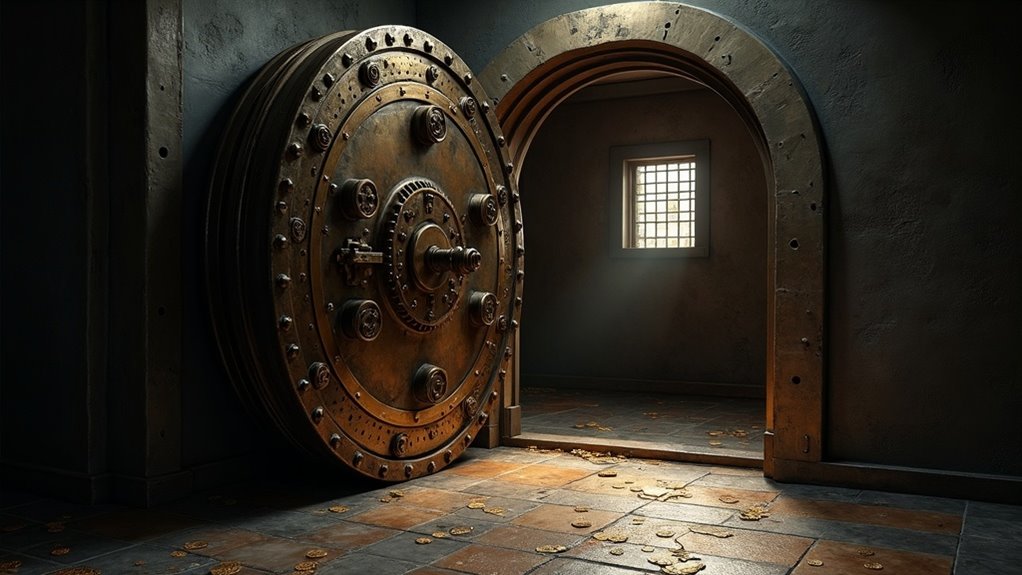
Bank vaults first appeared in the 1800s as simple strongrooms designed to resist burglary. They evolved as crime intensified, leading to innovations like steel-reinforced concrete for better asset protection. By the early 20th century, vaults incorporated advanced locking mechanisms and sophisticated security technology to counteract increasingly crafty thieves. Today, vaults not only secure financial assets but also fulfill unique functions, reflecting their critical role in history. There’s much more to uncover about their fascinating evolution.
Key Takeaways
- Early bank vaults appeared in the 1800s as basic strongrooms with thick steel-reinforced concrete walls for burglary resistance.
- Innovations in the early 20th century, spurred by notorious criminals, prompted advancements in vault design and security.
- Modern vaults incorporate advanced materials and technologies, such as steel-reinforced modular concrete panels and sophisticated locking mechanisms.
- Historical heists, including those by figures like Bonnie and Clyde, led to significant improvements in vault security measures over time.
- Vaults have evolved to serve diverse purposes beyond banking, safeguarding items like gold, documents, and seeds for global resilience.
The Evolution of Bank Vaults Through the Ages
As the need for safeguarding valuables grew, bank vaults evolved from rudimentary strongrooms in the 1800s to sophisticated security systems we see today.
Early designs featured thick walls of steel-reinforced concrete, providing substantial burglary resistance against common theft methods.
Early bank vaults utilized robust steel-reinforced concrete walls, offering significant protection against prevalent burglary techniques.
Innovations surged in the early 20th century, driven by infamous criminals like Bonnie and Clyde, prompting banks to enhance security features and locking mechanisms.
Modern vaults, utilizing advanced materials like steel-reinforced modular concrete panels, offer remarkable strength with reduced thickness.
Regulatory standards from Underwriters Laboratories guarantee these vaults effectively protect valuable assets against evolving threats, marking a significant chapter in the history of safes.
Key Features of Modern Bank Vaults
When it comes to modern bank vaults, their design reflects an intricate blend of advanced materials and cutting-edge security technology.
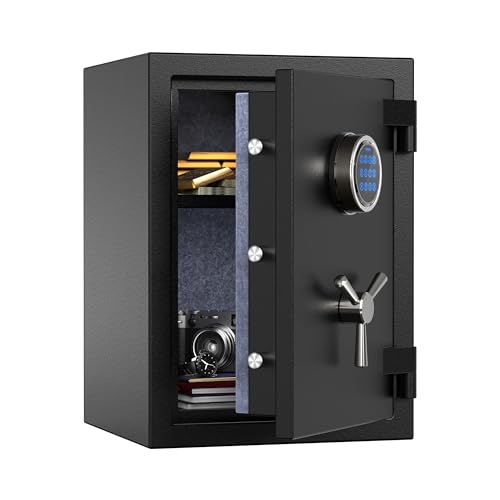
These vaults utilize steel-reinforced modular concrete panels, often up to 3 inches thick, enhancing their strength considerably.
Vault doors, molded from specialized concrete and clad in stainless steel, feature sophisticated lock mechanisms like dual control combination locks.
Integrated security systems include advanced security features such as alarms and anti-theft devices, continuously adapting to emerging threats.
Meeting rigorous burglary resistance standards, modern vaults safeguard important documents and valuables, ensuring safety and security in today’s banking environment.
Notable Vaults and Their Unique Functions
Modern vaults aren’t solely confined to banking; they serve a variety of unique functions that highlight their versatility.
The Bank of England, for instance, secures 20% of the world’s gold and precious metals, showcasing its role in international finance.
Meanwhile, the Iron Mountain Vault protects classified documents, emphasizing secure storage during the Cold War.
The Svalbard International Seed Vault guarantees global food resilience, safeguarding seeds against catastrophic events.
Additionally, the Royal Mint Vault provides fire resistance and a layer of protection for valuable coins.
These vaults illustrate how secure storage transcends traditional banking purposes, adapting to diverse needs.
Innovations in Vault Security Technology
While traditional vaults relied heavily on thick walls and basic locking mechanisms, innovations in vault security technology have transformed this aspect of financial and asset protection.
Modern banks now use steel-reinforced modular concrete panels for enhanced strength and crush resistance. Advanced locking mechanisms, like dual control combination locks and high-security locks classified under EN 1300, greatly improve security against unauthorized access.
Alarm systems and anti-theft devices continuously evolve to counter sophisticated burglary techniques. Rigorous testing by Underwriters Laboratories guarantees vaults withstand various attack methods, while collaborations between manufacturers, banks, and law enforcement drive innovations that effectively protect assets from emerging threats.
The Role of Vaults in Financial History
Vaults have played a pivotal role in shaping financial history, evolving from simple storage spaces to sophisticated security structures that reflect the changing landscape of commerce and crime.
As organized crime surged in the 1800s, financial institutions adopted bank vaults to safeguard valuables. The introduction of steel-reinforced concrete in the early 20th century, with walls exceeding a foot in thickness, enhanced asset protection remarkably.
Historical incidents, like Bonnie and Clyde‘s heists, prompted investments in advanced locking mechanisms and other security measures.
Today, institutions like the Bank of England showcase the ongoing importance of vaults in preserving wealth and ensuring trust in finance.