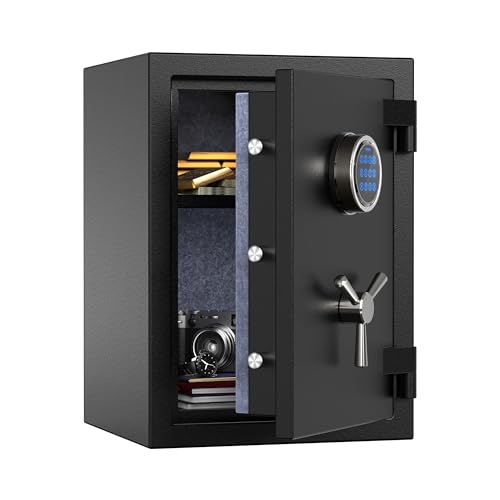
Fire resistant safes are designed to withstand high temperatures for specific durations, usually between 30 minutes to several hours, protecting contents from heat damage. In contrast, the term fireproof is misleading; no safe can offer complete immunity to flames. Instead, fireproof safes similarly resist fire but possess limits based on ratings. Understanding these distinctions helps you choose the appropriate safe for your needs, and there’s more to reflect on about features and certifications to guarantee proper protection.
Key Takeaways
- Fire-resistant safes are designed to withstand high temperatures for specific durations, while fireproof safes imply absolute resistance but are still fire-resistant.
- Fire-resistant safes use materials like fire clay for insulation, whereas fireproof safes often have thicker steel constructions.
- Certifications from organizations like UL and ETL validate the claims of fire-resistant safes, while fireproof claims may lack rigorous testing.
- Both types can fail under extreme conditions, highlighting the importance of realistic expectations regarding their protective capabilities.
- Fire ratings indicate how long a safe can protect contents from heat, with higher ratings suggesting better protection for sensitive items.
Understanding Fire Resistant Safes
When it comes to protecting your valuables from fire, understanding fire resistant safes is essential.
These safes are designed to withstand high temperatures and prevent fire exposure for specific durations, typically ranging from 30 minutes to several hours, depending on their fire rating.
Constructed with materials like fire clay or concrete, they enhance fire safety beyond standard steel.
Constructed from fire clay or concrete, these safes significantly improve fire safety compared to standard steel options.
Testing organizations like Underwriters Laboratories provide certifications and ratings, ensuring these safes maintain internal temperatures below critical thresholds, often below 350°F.
This capability helps protect sensitive items, including paper documents and digital media, from heat damage during a fire event.
Understanding Fireproof Safes
Fireproof safes offer a level of protection that many individuals seek to safeguard their most important items from the devastating effects of fire.
While marketed as fireproof, these safes are actually fire-resistant, meaning they can withstand fire for a specific duration, typically ranging from 30 minutes to several hours, without exceeding 350°F.
Testing organizations like UL and ETL evaluate their fire ratings, ensuring compliance with safety standards.
The construction materials often include thick steel and fire-resistant materials like fire clay, enhancing their structural integrity and fire protection capabilities against potential fire damage, though no safe can be entirely impervious to flames.
Key Differences Between Fire Resistant and Fireproof Safes
While both fire-resistant and fireproof safes are designed to protect your valuables from fire damage, significant distinctions exist between them. Fire-resistant safes offer specific fire resistance ratings, typically enduring 30 to 120 minutes against an external heat source, while fireproof safes suggest absolute resistance, which is misleading. The insulation materials vary, with fire-resistant safes using compounds to delay heat penetration, whereas fireproof safes often feature thicker steel. Certification from organizations like UL is essential, as many fireproof claims lack rigorous testing to guarantee reliability.
| Feature | Fire-Resistant Safes | Fireproof Safes |
|---|---|---|
| Fire Resistance Duration | 30-120 minutes | Implies absolute resistance |
| Insulation Materials | Fire clay, proprietary compounds | Thicker steel, enhanced insulation |
| UL Rating | Verified ratings available | Often a marketing term |
| Performance Under Heat | Can fail under extreme conditions | Can fail under extreme conditions |
| Testing Standards | Independent testing required | Verify claims with testing |
Testing and Certifications for Fire Safes
When choosing a fire safe, understanding the testing standards and certifications is essential.
Independent organizations like UL and ETL rigorously assess safes to guarantee they meet specific fire protection criteria.
Certification from these bodies not only validates a product’s performance but also helps safeguard your valuables from potential fire damage.
Testing Standards Overview
To guarantee the reliability of fire-resistant safes, independent organizations like Underwriters Laboratories (UL) and Intertek (ETL) conduct rigorous testing and evaluations. UL’s fire endurance tests expose safes to temperatures up to 1850°F, ensuring the internal temperature stays below 350°F for ideal ratings. Ratings often indicate the duration safes can protect contents, ranging from 45 to 120 minutes. ETL also performs waterproof testing, verifying safes can endure extreme water exposure for up to 72 hours. Below is a summary of the key testing standards:
| Testing Type | Organization | Duration/Temp |
|---|---|---|
| Fire Endurance Tests | UL | Up to 1850°F for 45-120 mins |
| Fire Resistance Claims | UL/ETL | Verified by testing |
| Waterproof Testing | ETL | Up to 72 hours |
| Internal Temperature | UL | Below 350°F |
Certification Importance Explained
Certification from reputable organizations like UL and ETL plays an essential role in ensuring the reliability of fire-resistant safes.
These certifications confirm that the safe meets stringent fire protection standards through extensive testing. UL subjects safes to extreme temperatures, ensuring internal conditions remain below 350°F. ETL’s verification adds assurance by confirming adherence to internal testing protocols.
Without these certifications, a safe may misrepresent its fire resistance claims, potentially jeopardizing your valuables.
Additionally, thorough testing for fireproof safes evaluates impact resistance and explosion hazards, solidifying their performance in real-world fire scenarios.
Always prioritize certified options for ideal protection.
Features to Look for in Fire Resistant and Fireproof Safes
When choosing fire-resistant or fireproof safes, you’ll want to pay close attention to fire ratings, construction materials, and certification standards.
Fire ratings indicate how long a safe can withstand high temperatures, while the materials used affect its overall insulation and durability.
Certifications from organizations like UL or ETL guarantee that the safe has met rigorous testing criteria for fire resistance.
Fire Ratings Explained
Understanding fire ratings is vital for selecting the right fire-resistant or fireproof safe. Fire ratings indicate a safe’s ability to withstand heat over time, typically ranging from 30 to 120 minutes at temperatures up to 1850°F.
Look for UL ratings, as they guarantee compliance with rigorous fire endurance tests, maintaining internal temperatures below 350°F. This is important for protecting documents and digital media.
Fire-resistant safes often utilize insulating materials like fire clay or concrete to enhance durability.
Additionally, consider water resistance ratings, as many safes can suffer damage from firefighting efforts, compromising your valuables.
Construction Materials and Insulation
Selecting the right safe involves scrutinizing the construction materials and insulation used in fire-resistant and fireproof models. Fire-resistant safes often use fire clay, concrete, or composites to withstand high temperatures. Thicker steel enhances fire protection, while effective insulation keeps internal temperatures below 350°F to protect your protective contents. Fireproof safes can endure over 1200°F for 40 to 120 minutes, depending on certification. Fire ratings are determined through rigorous testing to ascertain the materials used effectively protect against fire damage.
| Feature | Fire-Resistant Safes | Fireproof Safes |
|---|---|---|
| Insulation Type | Fire clay, concrete | Proprietary composites |
| Maximum Temperature | Up to 1200°F | Exceeds 1200°F |
| Duration | 40 to 120 minutes | Varies by certification |
| Internal Temp Limit | Below 350°F | Varies |
Certification Standards and Testing
While evaluating fire-resistant and fireproof safes, it’s important to take into account certification standards and testing procedures that validate their claims.
Look for these key features:
- UL Certification: Guarantees safes withstand extreme heat while maintaining internal temperatures below 350°F.
- ETL Certification: Verifies fire resistance and waterproof capabilities through rigorous testing.
- Time Ratings: Indicates how long safes can endure high temperatures (e.g., 30 or 60 minutes at 1200°F).
- Impact Testing: Assesses structural integrity by simulating drops and explosions.
- Detailed Ratings: Critical for distinguishing genuine protective capabilities from misleading claims.
Choosing the Right Safe for Your Needs
When it comes to choosing the right safe for your needs, several essential factors come into play. You need to evaluate fire ratings, materials, and certifications. Look for safes tested by organizations like UL or ETL, ensuring they offer adequate fire resistance. Check the fire rating, as it indicates how long the safe can withstand heat without compromising contents.
| Feature | Fire Resistant | Fireproof |
|---|---|---|
| Temperature Limit | Up to 350°F | Varies |
| Ratings (Minutes) | 40-120 | 0-120 |
| Water Resistance | Often Included | Varies |
Choose the best safe for your home!