A safe and a vault both protect valuables, but they’re different in design and security. Safes are portable, designed for residential use, and rely on locking mechanisms like keys or combinations. In contrast, vaults are immovable, built into structures with reinforced materials for maximum security. They often feature advanced locking systems and superior fire protection. Choosing the right option depends on your specific needs and risks. Discover further insights to make an informed decision.
Key Takeaways
- Safes are portable and designed for residential use, while vaults are immovable, built into structures for maximum security.
- Vaults offer superior protection with advanced locking mechanisms, compared to the basic locks typically found in safes.
- Safes come in various types, like fire-resistant and media safes, whereas vaults are specifically designed for high-security environments.
- Vaults are constructed with reinforced materials like steel-reinforced concrete, making them more complex and costly than standard safes.
- Both safes and vaults provide fire protection, but vaults excel in safeguarding against extreme threats and environmental hazards.
What Is a Safe?
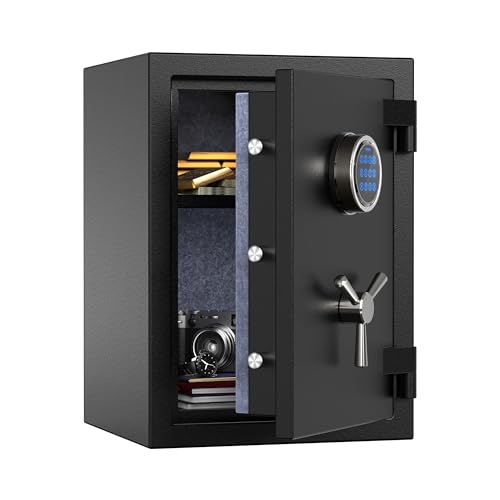
A safe serves as an essential stronghold for protecting your valuables from theft, damage, and environmental hazards. Built from robust materials like steel, safes feature complex locking mechanisms designed to enhance security.
Available in various types—fire-resistant, burglary, media, wall, and floor safes—they cater to specific protection needs. For instance, a fire-resistant safe is ideal for safeguarding important documents, while a burglary safe withstands forced entry.
Customizable options allow you to tailor your safe to your security requirements. By investing in a safe, you not only secure your valuables but may also reduce insurance premiums for those items.
What Is a Vault?
Vaults represent the pinnacle of security for valuable items, combining structural integrity with advanced safety features. Designed specifically to provide maximum protection, vaults are built into a building’s structure and constructed from steel-reinforced concrete, ensuring durability.
Their size and immovability set them apart from standard safes. Security features include advanced locking mechanisms and dual activated thermal seals, which protect against unauthorized access and fire.
Institutions like banks, jewelers, and casinos commonly utilize vaults to secure large quantities of cash and valuables, often supported by security personnel and monitoring systems, enhancing overall safety and safeguarding critical assets.
Key Differences Between Safes and Vaults
When comparing safes and vaults, it’s essential to recognize their fundamental differences in size, structure, and application.
Vaults are designed for high-security environments, offering superior protection with advanced secure locking mechanisms, making them ideal for banks and businesses.
In contrast, safes come in various types, such as fire-resistant options, catering to residential needs for securing important documents.
While both can provide fire protection, vaults typically feature enhanced systems to withstand extreme heat.
The difference between a safe and a vault ultimately lies in their construction complexity and security levels, with vaults generally costing considerably more due to their reinforced design.
Security Features of Safes and Vaults
When considering security features, safes and vaults differ greatly in their capabilities.
You’ll find that advanced locking mechanisms in vaults provide a higher level of protection, while both options can offer fire and water resistance.
However, vaults generally excel in these areas, making them the preferred choice for safeguarding valuable items in high-risk environments.
Advanced Locking Mechanisms
While both safes and vaults are designed to protect valuable items, their advanced locking mechanisms reveal significant differences in security technology. Vaults often employ biometric scanners and multi-point locking systems for superior security, while safes typically use combination, key, or electronic locks. High-end safes may offer smart technology for remote access, but vaults are built with complex locking mechanisms that resist tampering. Dual locking systems are common in both, adding layers of security. Understanding these differences helps you assess the appropriate option for your security needs.
| Feature | Safes | Vaults |
|---|---|---|
| Lock Types | Key, Combination, Electronic | Biometric, Time-Delay, Multi-Point |
| Security Level | Moderate | High |
| Tamper Resistance | Basic | Advanced |
| Dual Locking Systems | Often available | Commonly integrated |
| Technology | Smart options | High-tech features |
Fire and Water Resistance
Understanding the differences in security features extends beyond locking mechanisms to include fire and water resistance.
Vaults typically offer superior fire resistance, featuring dual activated thermal seals and inferno shields, protecting high-value items for up to two hours. While both safes and vaults provide fireproof features, vaults, with their reinforced walls, deliver maximum protection compared to standard safes.
Many safes are designed to withstand high temperatures for specific durations, safeguarding important documents during fires.
Water resistance is also essential; modern safes often include features to protect against water damage from flooding or fire suppression systems, ensuring thorough protection for your valuables.
Choosing Between a Safe and a Vault
When choosing between a safe and a vault, you need to assess your security needs and budget.
Safes generally provide adequate protection for personal items, while vaults are better suited for high-risk environments requiring enhanced security.
Additionally, consider the cost implications, as safes are typically more affordable than the substantial investment required for vaults.
Assess Security Needs
Evaluating your security needs involves a careful appraisal of the types and quantities of valuables you intend to store, as the choice between a safe and a vault greatly impacts your protection strategy.
Vaults offer a higher level of security, making them ideal for high-value items and larger volumes. Consider potential risks, such as theft or extreme weather, as vaults provide maximum security against these threats.
Assess your installation location; vaults are immovable while safes can be portable.
Finally, keep budget considerations in mind, as vaults typically require a larger investment, often suggested to be around 10% of the item value.
Evaluate Cost Considerations
After evaluating your security needs, it’s important to contemplate the financial implications of selecting either a safe or a vault. Here are some cost considerations to keep in mind:
- Affordability: Safes typically range from a few hundred to several thousand dollars, while vaults can cost tens of thousands due to extensive security features.
- Installation Costs: Vaults may require additional construction and reinforcement, increasing your initial investment.
- Long-term Investments: Vaults can lead to reduced insurance premiums, potentially offsetting their higher costs over time.
Choose wisely, balancing your immediate budget and long-term security solutions for ideal protection.
Benefits of Using a Safe or Vault
While both safes and vaults serve the essential purpose of protecting valuables, they each come with distinct benefits tailored to different needs.
A gun safe provides the portability you require for residential or small business use, while vaults, often built into walls, offer enhanced security for large businesses.
Gun safes offer portability for home or small businesses, whereas vaults deliver superior security for larger enterprises.
Vaults accommodate larger quantities and meet specific security requirements, making them ideal for environments like banks.
Both options include fireproof features, but vaults generally provide superior fire protection with advanced designs.
Understanding the differences between safes and vaults helps you choose the best solution for your security needs and peace of mind.