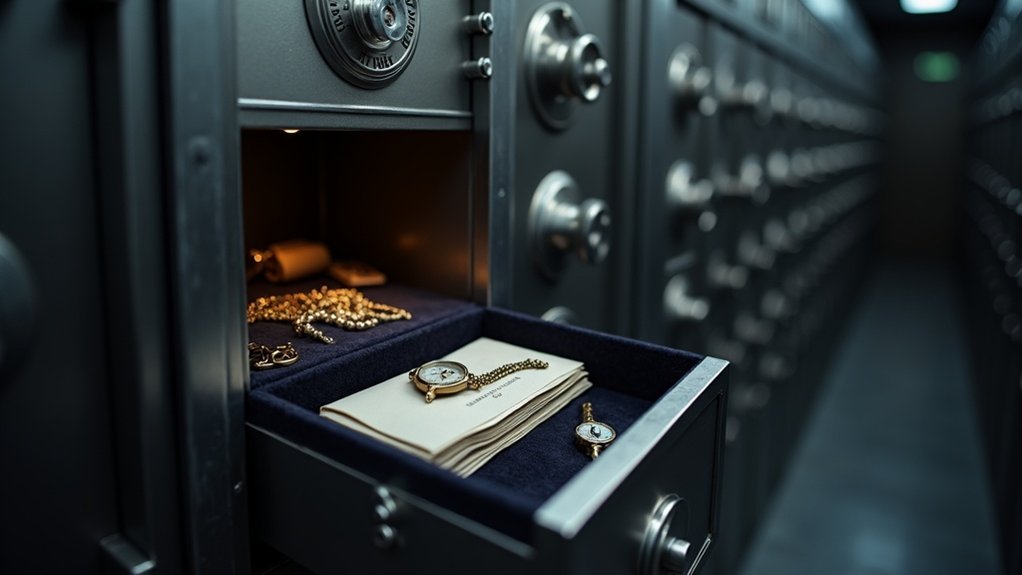
A safe deposit box is a secure storage option that banks provide for your valuable items and important documents. It works using a dual-key system; you’ll need your own key and a bank-held key for access. To verify your identity, you’ll also present personal identification. While it’s ideal for items like legal documents and collectibles, remember that contents aren’t FDIC insured, so personal insurance is recommended. If you want to know more about what to store, keep exploring.
Key Takeaways
- A safe deposit box is a secure storage solution for valuable items, located within a bank’s vault.
- Access requires two keys: one from the renter and another held by the bank for enhanced security.
- Rental fees vary by size and location, typically ranging from $15 to $350 annually.
- Contents are not insured by the FDIC; personal insurance for high-value items is recommended.
- Access procedures often require personal identification and may involve co-renters, depending on bank policies.
Understanding Safe Deposit Boxes
A safe deposit box serves as a secure sanctuary for your most valuable possessions and important documents.
Located within a bank vault, these boxes provide enhanced security against theft and damage. To access the safe deposit, you’ll need two keys—one you hold and another kept by the bank, along with personal identification.
Rental fees vary based on size, typically ranging from $15 to $350 annually. While these boxes offer secure storage, remember that contents aren’t insured by the FDIC, so considering personal insurance for high-value items is wise.
Additionally, access is limited to bank operating hours, which can be inconvenient.
How Safe Deposit Boxes Function
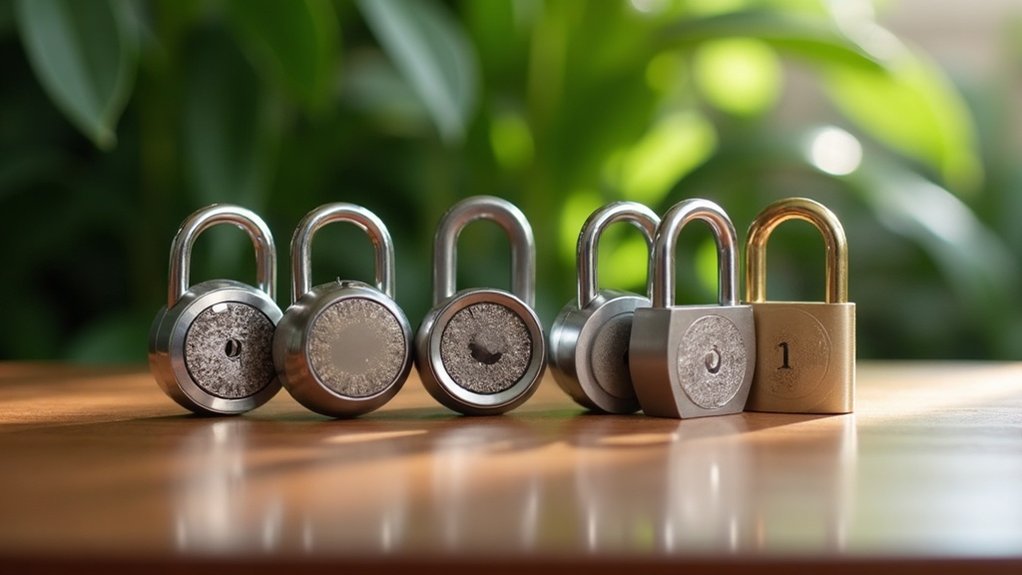
Safe deposit boxes function through a precise access mechanism that utilizes a dual-key system, requiring both your key and the bank’s key for entry.
When you rent a box, you enter into a rental agreement that specifies access protocols, including the option to add co-renters.
Understanding these aspects is essential for ensuring the security and accessibility of your valuables.
Key Access Mechanism
When accessing a safe deposit box, you engage in a carefully designed key access mechanism that enhances security. Each box operates under a dual key system: you hold one key, while the bank retains the other.
To gain access, you must present personal identification to verify your status as the renter, along with both keys during bank operating hours. Some banks also offer biometric access, like fingerprint scans, for an extra layer of security.
If you have co-renters, all may need to be present for access, depending on the bank’s policies outlined in your rental agreement.
Rental Agreement Process
Renting a safe deposit box involves a straightforward yet important process that guarantees both security and accessibility.
You’ll start by filling out a rental agreement at your chosen bank, specifying the box size. A valid form of identification, like a driver’s license or passport, is required. Upon completion, you receive a personal key to your box, while the bank holds a guard key for security.
The rental agreement outlines the terms of use, including co-renters’ permissions and the bank’s liability regarding the contents. Fees for renting range from $15 to $350 annually, depending on size and location.
Recommended Items for Safe Deposit Boxes
Storing important items in a safe deposit box can greatly enhance their protection against theft, damage, or loss.
Here are some recommended items you should consider storing:
- Legal documents: Wills, contracts, and property deeds for secure storage.
- Family heirlooms: Protect irreplaceable items and valuable jewelry from theft.
- Collectibles: Rare coins, stamps, or art pieces that require safekeeping.
- Digital data: Backup copies of USB drives and external hard drives to prevent data loss.
Using safe deposit boxes not only secures your valuables but also provides peace of mind knowing they’re protected.
Items Not Suitable for Safe Deposit Boxes
When considering what to store in a safe deposit box, it’s essential to avoid items that require immediate access, like passports or legal documents, since you can only access them during bank hours.
Additionally, prohibited items such as firearms and hazardous materials not only violate bank policies but could also lead to legal complications.
Understanding these limitations will help you make informed decisions about what to securely store.
Immediate Access Needs
How can you guarantee that your most critical items are always within reach?
Safe deposit boxes aren’t designed for immediate access needs.
Consider these items that require quick retrieval:
- Cash – It doesn’t earn interest and lacks insurance coverage.
- Living Wills – Important documents needed during emergencies should be easily accessible.
- Emergency Funds – Keep these in a location you can access outside bank operating hours.
- Personal Items – Items like cremated remains or firearms must be stored securely but within reach for quick access.
Ensure you choose a suitable storage location for these essentials.
Prohibited or Hazardous Items
While safe deposit boxes offer a secure method for storing valuable items, there are specific items that should never be placed inside them due to safety, legal, or practical concerns.
Prohibited items include firearms, ammunition, and any illegal substances, as these can violate bank policies and local laws.
Additionally, hazardous materials, such as chemicals and explosives, are strictly forbidden due to safety concerns.
It’s also wise to avoid perishable goods that may spoil and damage other contents.
Always keep in mind the limitations of safe deposit boxes and guarantee your valuables comply with regulations for safe storage.
Costs Associated With Safe Deposit Boxes
The costs associated with safe deposit boxes can vary considerably, typically ranging from $15 to $350 per year based on factors like size and location within the bank.
Here’s what you should know about safe deposit box costs:
- Smaller boxes (e.g., 3×5) can cost around $85 annually.
- Larger boxes (e.g., 10×10) may reach approximately $300 per year.
- Some banks offer free safe deposit boxes for specific accounts or balances, though availability may vary.
- Rental fees can be charged annually or monthly, so always review your bank or credit union’s terms before committing.
Insurance Considerations for Safe Deposit Box Contents
What happens to your valuable items stored in a safe deposit box if disaster strikes?
Unfortunately, the Federal Deposit Insurance Corporation doesn’t insure contents inside a safe deposit box. You must consider separate insurance for high-value items.
The contents of your safe deposit box aren’t covered by federal insurance; consider separate insurance for valuable items.
Check your homeowner’s or renter’s insurance policies, as coverage for items in safe deposit boxes can vary considerably. Many banks suggest obtaining personal insurance policies for added protection.
Always maintain a detailed inventory and appraisals of your items to simplify claims. Additionally, remember that failing to pay rental fees could lead to the bank declaring your belongings as unclaimed property, complicating recovery.