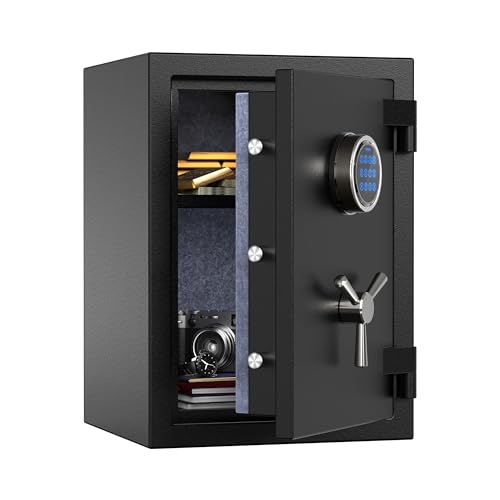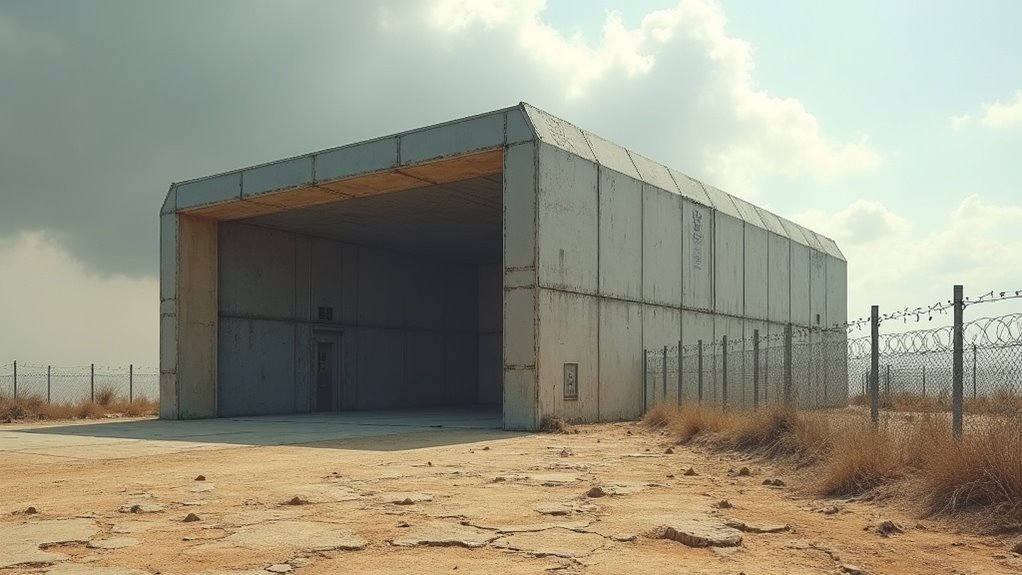
A nuclear blast resistant vault is a secure structure built to protect you from the devastating impacts of nuclear explosions, such as blast waves and radioactive fallout. These vaults feature solid granite or reinforced concrete for durability, advanced air filtration systems to purify the air, and six-ton stainless steel doors for added security. They operate without external power, ensuring safety during extended crises. Discover more about their construction and essential supplies for habitation to enhance your preparedness.
Key Takeaways
- Nuclear blast resistant vaults protect against nuclear explosions, including blast waves, thermal radiation, and radioactive fallout.
- They are constructed from solid granite or reinforced concrete for high durability and structural integrity.
- Equipped with advanced air filtration systems, these vaults maintain air quality and operate without external power.
- Features include a six-ton stainless steel door for security and blast valves to protect against shock waves.
- Essential supplies like water, non-perishable food, and sanitation solutions are necessary for extended habitation within the vault.
Definition and Purpose
A nuclear blast resistant vault serves as a critical safeguard against the catastrophic effects of a nuclear explosion.
These specialized nuclear blast shelters are designed to protect occupants from destructive blast waves, thermal radiation, and radioactive fallout. Constructed from solid granite or reinforced concrete, they guarantee exceptional durability and resistance to extreme pressure.
The vault’s advanced ventilation systems feature air filtration capabilities to maintain a safe environment, filtering out contaminants from nuclear, biological, and chemical threats.
Additionally, these vaults can operate without external power, equipped with manual ventilation and emergency supplies, assuring occupants remain secure and supported for extended periods.
Key Features and Design Considerations
While considering the design of a nuclear blast resistant vault, it’s essential to incorporate features that guarantee maximum protection and functionality.
A well-constructed nuclear shelter relies on solid granite or reinforced concrete to withstand extreme pressures, often resisting several hundred psi. Key design considerations include a six-ton stainless steel door for shock absorption and security, along with advanced air filtration systems that maintain internal air quality.
A nuclear shelter must feature solid granite or reinforced concrete, a heavy stainless steel door, and advanced air filtration for optimal safety.
Additionally, blast valves on ventilation openings protect against shock waves, and effective shielding against gamma rays uses dense materials, ensuring occupant safety from radiation exposure.
Every aspect contributes to a secure, livable environment in potential disasters.
Construction Materials and Techniques
When constructing a nuclear blast resistant vault, selecting appropriate shielding materials is essential for effective radiation protection and structural integrity.
You’ll need to take into account methods for reinforcing the structure, ensuring it can withstand extreme pressures and shock waves.
Utilizing a combination of thick concrete, galvanized steel, and advanced construction techniques will optimize both safety and durability.
Shielding Material Selection
Selecting the right shielding materials for a nuclear blast resistant vault is critical to ensuring maximum protection against radiation exposure. Options like lead, concrete, or packed earth effectively reduce gamma ray exposure by approximately 1024 times.
Utilizing thick, steel-reinforced concrete walls enhances durability against overpressure and minimizes structural failure risks. Expedient shelters, such as trenches covered with earth, offer low-cost shielding alternatives.
Additionally, blast doors designed to absorb shock waves contribute to the vault’s integrity while blocking harmful radiation. Proper installation techniques are paramount, ensuring material quality and thickness to maintain long-term effectiveness against nuclear threats.
Structural Reinforcement Methods
To achieve maximum protection in nuclear blast resistant vaults, employing effective structural reinforcement methods is vital.
Utilizing steel-reinforced concrete guarantees the vault can withstand extreme overpressures and deflect shock waves, maintaining structural integrity.
Galvanized steel inner linings further enhance this integrity against radiation and blast effects.
Earth arching techniques provide compressive protection, leveraging the earth’s strength against blasts and gamma ray exposure.
It’s essential to incorporate adequate shielding materials, like concrete or lead, to reduce gamma ray exposure considerably.
Additionally, advanced blast doors absorb shock waves, preserving the vault’s integrity while allowing secure access points.
Air Filtration and Environmental Control
Advanced air filtration systems in nuclear blast resistant vaults play a critical role in maintaining a safe environment for occupants during and after a nuclear event.
These systems guarantee effective environmental control by removing harmful particles.
Consider the following features:
- NBC air filtration technology filters out 99.97% of airborne particulates.
- Manual ventilation systems allow operation during power outages.
- Air is re-circulated every six hours to maintain oxygen levels.
- Blast valves protect ventilation openings from shock waves.
- Continuous air circulation enhances overall survivability.
Essential Supplies and Habitation Requirements
While preparing for potential nuclear events, ensuring you have the right essential supplies and habitation requirements is important for survival.
You should stock at least 4–8 liters of water per person daily, aiming for a two-week supply. Non-perishable food options like canned goods, dried fruits, and energy bars are compact and sustain inhabitants effectively.
Effective sanitation solutions, such as septic tanks, are necessary for waste management, given unreliable mains services.
Additionally, consider installing internal air cooling systems and air filtration to maintain livability and prevent contamination, ensuring a safe environment within your shelter during extended stays.
Historical Context and Notable Examples
The development of nuclear blast resistant vaults has its roots in the geopolitical tensions of the 20th century, particularly during the Cold War.
These vaults serve to protect critical assets and personnel from nuclear explosions. Notable examples include:
- Cheyenne Mountain nuclear bunker: A military command center built for exceptional protection.
- Armijska Ratna Komanda D-0 (Ark): A Yugoslav command center showcasing high-ranking nuclear protection.
- Sonnenberg Tunnel: Designed to shelter 20,000 civilians during nuclear emergencies.
- Public fallout shelters: Evolved from the U.S. Community Fallout Shelter Program initiated in 1961.
- Private nuclear facilities: Reflecting widespread public concern over nuclear threats.
Future Trends in Nuclear Vault Design
As the geopolitical landscape evolves, future trends in nuclear vault design are set to embrace cutting-edge technologies and materials that enhance safety and functionality.
You’ll see advanced materials like carbon nanotubes and graphene improving structural integrity while reducing weight. Automation and IoT connectivity will enable real-time monitoring of environmental conditions and threats.
Emphasizing sustainable energy solutions, future designs may incorporate solar panels and wind turbines, ensuring self-sufficiency for essential systems. Additionally, enhanced air filtration using nanotechnology will provide cleaner air in emergencies.
Modular and prefabricated designs will allow quicker deployment while maintaining high safety standards across diverse locations.