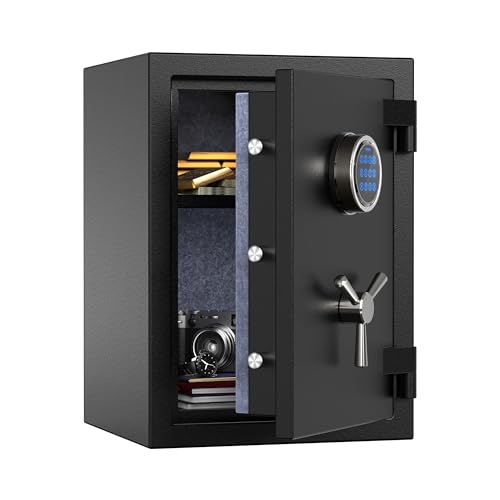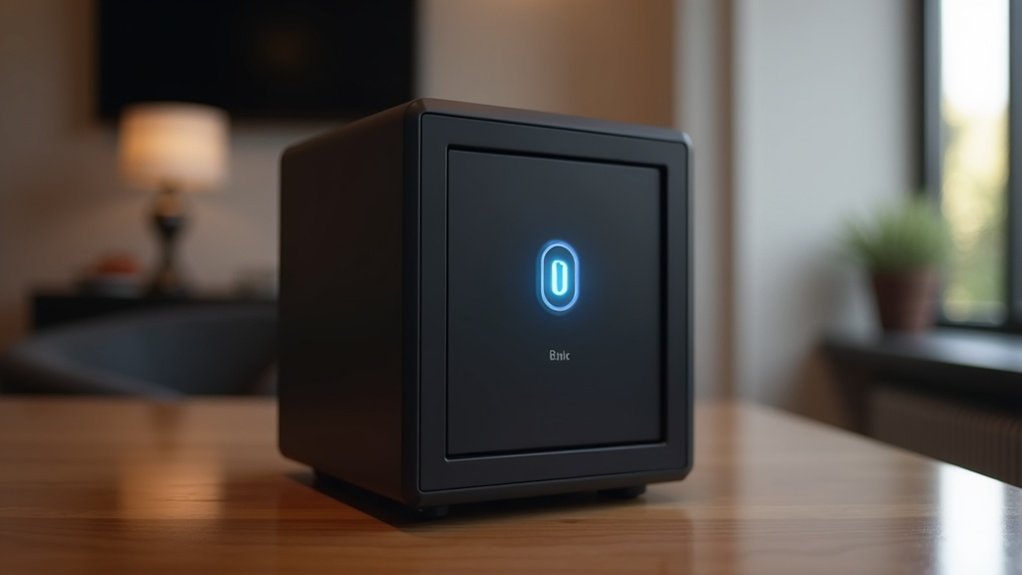
A biometric lock safe secures your valuables using advanced technology that scans unique physical characteristics, like fingerprints, for identity verification. These safes store multiple fingerprints, allowing authorized users quick access—often in under two seconds—while effectively preventing unauthorized entry. However, they can face reliability issues due to dirt, moisture, or low batteries. Understanding the advantages and potential drawbacks is essential for making an informed choice, and there’s more to explore about their functionality and applications.
Key Takeaways
- A biometric lock safe uses unique physical characteristics, like fingerprints, for identity verification and secure access.
- These safes store multiple fingerprints, allowing access to authorized users without the need for keys or combinations.
- Biometric locks grant rapid access, often within two seconds, enhancing convenience in emergencies.
- Reliability may be affected by dirt, moisture, or battery issues, posing challenges in some situations.
- Future trends include improved technology, affordability, and integration with smart home systems for better security.
What Are Biometric Locks?
Biometric locks are advanced security devices that leverage unique physical characteristics for identity verification, making them a significant upgrade over traditional locks.
Utilizing biometric technology, these locks often employ a fingerprint scan, recognizing the distinct patterns of an individual’s fingerprint. This process provides a higher level of security, as they can store multiple fingerprints, allowing several authorized users access while preventing unauthorized access.
However, it’s important to note that environmental factors, such as dirt or moisture, may affect the sensor’s performance, potentially compromising reliability.
How Do Biometric Locks Work?
These locks operate by scanning and recognizing unique physical characteristics, primarily fingerprints, to verify user identity. When you place your finger on the sensor, the biometric lock scans and compares the data with stored templates of authorized users. If a match is found, it grants access rapidly, eliminating the need for keys or combinations.
Most biometric systems utilize capacitive or semiconductor sensors, enhancing accuracy and reliability in various conditions. You can register multiple fingerprints, allowing access for several individuals.
However, remember that these battery-operated locks require regular maintenance, including battery replacement and cleaning the scanner, to guarantee ideal functionality.
Advantages of Biometric Locks for Safes
When considering a safe’s security features, the advantages of biometric locks stand out due to their ability to provide rapid access and enhanced protection.
Here are three key benefits you should know:
- Quick Access: Biometric locks can access the safe in as little as two seconds, essential in emergencies.
- Enhanced Security: Utilizing unique physical data like fingerprints makes unauthorized access extremely difficult.
- Multiple Users: These locks can store several fingerprints, allowing trusted family members to access the safe without keys.
Disadvantages of Biometric Locks for Safes
Biometric locks can present significant reliability issues, as they may fail to recognize your fingerprint due to dirt or moisture.
Additionally, the reliance on batteries means you could find yourself locked out if they run low or die.
You should also consider the risk of biometric data theft, which raises serious privacy concerns regarding unauthorized access to your personal information.
Technical Malfunctions and Reliability
Despite their advanced technology, biometric locks for safes can suffer from significant technical malfunctions that compromise their reliability.
When you’re relying on a biometric system, it’s essential to understand potential drawbacks such as:
- Failure to recognize biometric data due to dirt, moisture, or wear on your fingers.
- False positives that could grant unauthorized access if the scanner misreads your fingerprint.
- Battery dependency, where a dead battery can lead to complete access denial.
These issues highlight that while biometric locks present a modern security solution, their reliability can be inconsistent, affecting overall security effectiveness.
Privacy and Data Concerns
While many users appreciate the convenience of biometric locks for safes, significant privacy and data concerns accompany their use.
Biometric safe locks store sensitive biometric data, which raises the risk of data breaches and unauthorized access. If hackers infiltrate the system, they could misuse your biometric data, presenting a security risk that traditional locks don’t face.
Additionally, privacy concerns emerge when biometric data is collected without your consent, limiting your control over personal information. The irreversible nature of this data means that once compromised, it can lead to long-term vulnerabilities, making proper encryption and protection paramount.
Important Questions to Ask Before Purchasing a Biometric Safe
- Security certifications
- Number of users
- Budget for purchase and maintenance
Who Uses Biometric Safes?
Biometric safes cater to specific security needs, particularly for gun owners who prioritize quick access to firearms while ensuring unauthorized individuals can’t gain entry.
Additionally, business asset protection is a key consideration, as professionals seek to secure sensitive documents and valuable items efficiently.
Understanding these user groups highlights the practical applications of biometric safes in both personal and commercial settings.
Gun Owners’ Security Needs
For gun owners, the need for both security and accessibility shapes their choice of firearm storage solutions.
Biometric safes offer a biometric smart, secure option by providing quick access through advanced fingerprint recognition. Here are key benefits:
- Rapid Release: Most biometric safes release in two seconds or less, ensuring immediate access in emergencies.
- Prevent Unauthorized Access: Only registered users can open the gun safe, vital for households with children.
- Multiple Fingerprint Registrations: Accommodate family access while maintaining strict security protocols.
These features align with the heightened security needs of responsible gun owners seeking innovative storage solutions.
Business Asset Protection
As businesses seek to bolster their security measures, many are turning to biometric safes for effective asset protection.
Industries such as finance, healthcare, and law enforcement utilize these safes to securely store sensitive documents and critical assets, ensuring only authorized personnel gain access.
Retail establishments implement biometric safes for managing cash registers and inventory, minimizing theft risks while providing rapid access for employees.
Educational institutions also rely on them to safeguard valuable equipment and materials.
The Future of Biometric Safes
With the rapid advancements in technology, the future of biometric safes looks promising, driven by increasing consumer demand for secure and convenient access solutions.
Here are three key trends shaping this future:
- Affordability: As technology improves, biometric safes become more accessible to a wider range of consumers.
- Smart Home Integration: Enhanced functionality through integration with smart home systems enables remote monitoring and control.
- Improved Recognition Technology: Continuous advancements promise to reduce false positives, increasing reliability and security.
These developments will make biometric safes a standard choice for those prioritizing security and convenience in their homes.