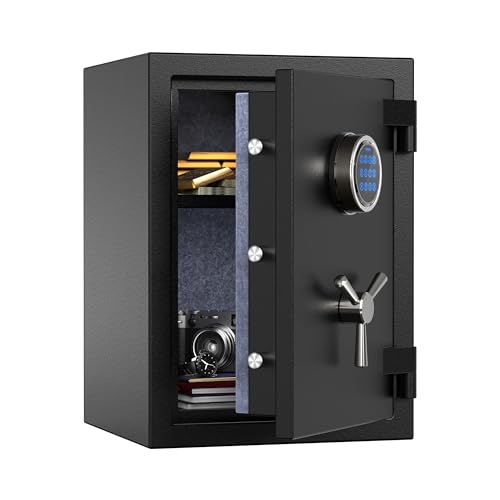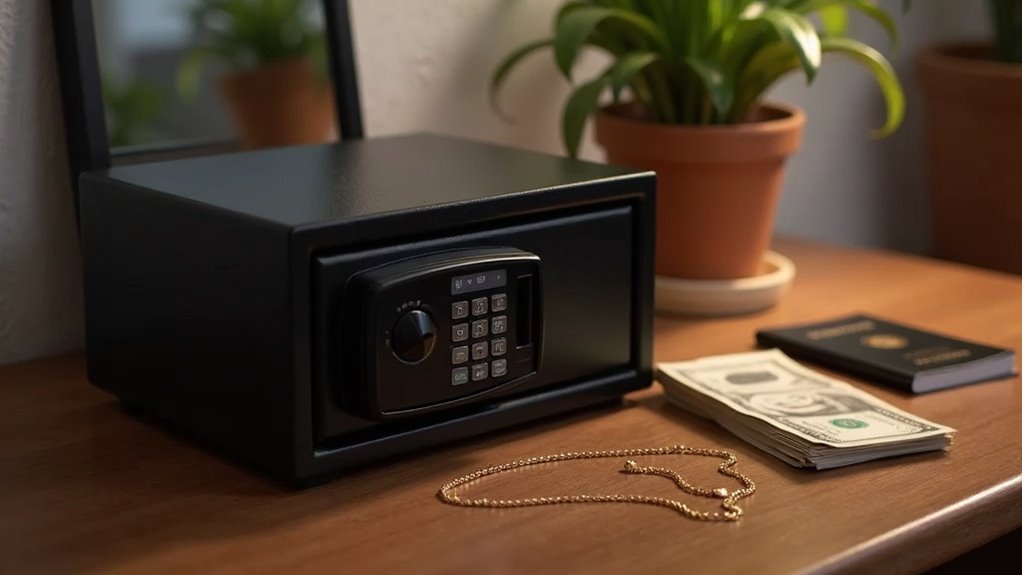
Small personal safes are crucial for securely storing cash, jewelry, and important documents. They keep essential records, medical information, and personal keepsakes safe from theft and damage. With features like digital locks and fire resistance, these compact solutions offer peace of mind. You can place them discreetly in closets or under beds for ideal concealment. If you’re considering adding one to your home, you’ll find more details about their benefits and types to choose from.
Key Takeaways
- Small personal safes securely store cash, jewelry, and family heirlooms, protecting them from theft or damage.
- They safeguard vital documents like wills, passports, and financial records for easy access and security.
- Personal keepsakes, such as photo collections and diaries, can be protected from unauthorized access and environmental hazards.
- Mini safes help maintain privacy and security, especially in an increasingly insecure world.
- They provide a compact solution for organizing medical documents and insurance information efficiently.
Common Uses for Small Personal Safes
When it comes to securing your valuables, small personal safes play an essential role in protecting a variety of important items.
These safes keep cash, jewelry, and family heirlooms secure from theft or damage. They’re ideal for safeguarding vital documents like wills, passports, and financial records, ensuring sensitive information remains protected.
Small personal safes protect cash, jewelry, and vital documents, ensuring your most important items remain secure and private.
Additionally, many users rely on safes to keep medical documents and insurance information organized and easily accessible. Personal keepsakes, such as photo collections and diaries, also find a protective space in these safes, preventing loss from fire or water.
In an insecure world, safes keep your privacy intact.
Security Features to Consider
Although you might think all small personal safes are created equal, several critical security features can greatly affect their effectiveness.
Look for security safes with digital locking systems that enable you to set personal passwords, enhancing protection against unauthorized access. A spare key option is essential, allowing access in case of forgotten passwords.
Consider the construction materials; alloy steel offers impact resistance. Features like mounting holes can secure the safe to walls or floors, complicating removal by thieves.
Additionally, some models provide fire and water resistance, safeguarding your valuables from environmental hazards.
Prioritize these features for peak security.
Benefits of Owning a Mini Safe
Owning a mini safe offers numerous advantages that cater to your security needs without overwhelming your space.
A money safe provides a compact solution for securely storing cash, jewelry, and important documents in homes, offices, or hotels. Its fire-resistant and sometimes water-resistant materials protect your valuables from damage.
Many models feature digital locks, allowing you to set personal passwords for enhanced security. Their lightweight design guarantees portability, letting you relocate the safe as needed.
Additionally, mini safes are cost-effective, delivering the same security as larger safes while being easier to conceal, making them ideal for personal security.
Ideal Locations for Placement
To maximize the security benefits of your mini safe, selecting the right location for placement is key.
Consider placing your small safe discreetly inside closets or wardrobes to keep valuables hidden from view. In home offices, it’s perfect for storing important documents and sensitive information securely.
For excellent concealment, try positioning your small safe under a bed or behind furniture. Wall-mounted options are also advantageous, allowing for versatile placement in hallways or entries without occupying floor space.
When traveling, using a small personal safe in hotel rooms guarantees your personal items remain secure, providing peace of mind.
Types of Items to Store
When contemplating what to store in your small personal safe, prioritize items that require both security and accessibility.
Safes are perfect for protecting valuables and important documents, ensuring peace of mind.
Here are some key items to contemplate:
- Cash and jewelry, especially family heirlooms
- Important documents like wills and passports
- Financial records, including insurance and medical documents
- Personal memorabilia, such as photo collections and diaries
- Confidential information, like social security numbers
Choosing the Right Size
When choosing the right size for a small personal safe, consider the space you have available and the items you intend to store.
You’ll want to guarantee it fits comfortably in your chosen location while accommodating your essentials, like cash and jewelry.
Think about whether features like a digital lock or removable shelf will enhance your usage and security needs.
Space Considerations
Choosing the right size for a small personal safe is essential, especially if you’re working with limited space.
Here are some factors that can help you choose wisely:
- Compact dimensions, like 6.69D x 9.06W x 6.69H inches
- Lightweight design, typically around 2.2 kg (4.84 lbs)
- Suitable for placement on tables, desks, or wall mounting
- Removable interior shelf for customizable storage
- Adequate capacity for documents, cash, and jewelry
Item Capacity
Item capacity is a critical factor in selecting a small personal safe, as it directly influences what you can securely store. Most small safes offer around 0.23 cubic feet of space—perfect for cash, jewelry, and essential documents like passports.
When choosing the right size, think about the volume of items you want to keep safe. While a small safe can hold several pieces of jewelry, it won’t accommodate bulkier items.
Many models include removable shelves for better organization. Remember to evaluate dimensions and internal configurations to verify your safe meets your storage needs while providing security, especially with a digital keypad.
Intended Use
Understanding the intended use of a small personal safe is essential for selecting the right size. The size you choose directly impacts how well it works for your needs.
Consider the following:
- Securely store cash and coins
- Protect jewelry and valuable items
- Safeguard important documents like passports
- Fit easily in desks or closets
- Opt for wall-mounted designs for concealment
A safe with a capacity of 0.23 cubic feet works well for small items, while larger models accommodate a broader range of valuables.
Assess your storage needs carefully to guarantee ideal organization and security.
Maintenance and Care Tips
While your small personal safe provides crucial protection for your valuables, regular maintenance is essential to guarantee its continued effectiveness. Follow these tips for ideal care:
| Task | Frequency | Purpose |
|---|---|---|
| Check locking mechanism | Monthly | Ensure proper function |
| Clean exterior | Monthly | Prevent damage from dust |
| Inspect for moisture | Quarterly | Avoid corrosion |
| Update contents | Biannually | Maintain significance of items |