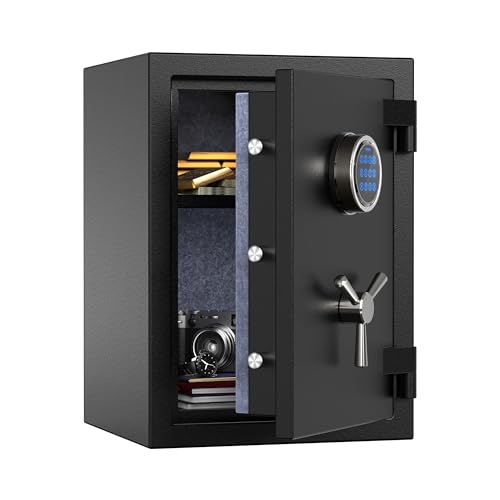
Residential Security Containers (RSCs) offer basic theft protection for valuables like documents, jewelry, and firearms. However, they’re often confused with true gun safes due to misleading marketing. RSCs are rated by Underwriters Laboratories for limited burglary resistance, usually between five to ten minutes against basic tools, which isn’t sufficient against modern break-in techniques. While they may provide some security, they lack robust fire ratings and materials. Understanding these limitations can help you make better choices for protecting your items. You might find even deeper insights ahead.
Key Takeaways
- Residential Security Containers (RSCs) are designed to provide basic theft protection for valuable items like documents and firearms.
- RSCs are governed by the UL 1037 standard, which focuses on resisting unauthorized access for limited time periods.
- They are rated at three performance levels, indicating resistance times of up to five to ten minutes against break-ins.
- RSCs lack robust materials and independent fire ratings, making them less secure than true gun safes.
- Misleading fire protection claims and construction issues can leave valuables vulnerable in actual fire scenarios.
Understanding Residential Security Containers
When considering security for your home, it’s crucial to understand what Residential Security Containers (RSCs) really offer.
Designed to provide basic theft protection, RSCs are governed by the UL 1037 standard. These containers are categorized into three performance levels, with Level 1 offering minimal resistance to forced entry.
While marketed as secure storage solutions, RSCs often lack true fire ratings and are typically constructed from lighter materials, including corrosive drywall. This construction compromises the safety of valuables and RSC certified guns.
RSCs may be marketed as secure, but their lightweight materials and lack of fire ratings compromise safety.
Ultimately, while they offer some protection, their effectiveness against theft and fire is limited compared to traditional steel cabinets.
The Purpose of RSCs
Residential Security Containers (RSCs) serve a specific purpose in home security by providing a basic level of protection for valuable items such as important documents, jewelry, and firearms. Governed by the UL 1037 standard, RSCs offer limited resistance to forced entry, making them suitable for securing items against unauthorized access. However, while often marketed as gun safes, they may lack the robust security features and adequate fire ratings of true gun safes. Understanding these distinctions helps you make informed choices to enhance your home’s security.
| Feature | RSC |
|---|---|
| Security Level | Basic |
| UL Standard | UL 1037 |
| Fire Rating | Limited |
| Common Use | Document/Jewelry |
| Confusion | Gun Safe vs RSC |
RSC Ratings and Performance Levels
Understanding RSC ratings and performance levels is essential for selecting the right security solution for your home.
Underwriters Laboratories establishes three RSC ratings: Level 1, Level 2, and Level 3, each defining different security levels against forced entry attempts.
Level 1 resists break-ins for up to five minutes with basic tools, while Level 2 withstands ten minutes from two attackers using more aggressive tools.
Level 3 also resists for ten minutes but faces more severe attacks.
These performance criteria focus on common burglary resistance, making RSCs less effective against advanced techniques, aiding your informed decision for enhanced home security.
Limitations of RSCs Compared to True Safes
When comparing Residential Security Containers (RSCs) to true safes, you’ll find significant limitations in security performance and material quality.
RSCs are only rated to resist forced entry for five minutes, leaving them vulnerable to modern burglary methods.
Additionally, their construction often lacks the robust materials and independent fire ratings found in true safes, casting doubt on their effectiveness in protecting your valuables.
Security Performance Limitations
While many homeowners opt for Residential Security Containers (RSCs) to safeguard their valuables, these units fall short of the robust protection offered by true safes.
RSC containers are rated for only five minutes against forced entry using basic tools, a standard from the 1850s. Unlike rated safes, they lack resistance to power tools or extended attacks, making them vulnerable to modern burglary tactics.
Additionally, many RSCs use thin steel and drywall, offering inadequate fire protection. With security performance akin to basic steel cabinets rather than true gun safes, firearms and valuables remain inadequately protected within these containers.
Material Quality Concerns
The material quality of Residential Security Containers (RSCs) raises significant concerns for homeowners looking to protect their valuables.
Unlike true safes in the gun safe industry, RSCs often utilize thin steel and drywall, which can damage firearms over time due to corrosive chemicals.
True fire-rated safes employ high-quality materials like 10-gauge steel, offering better fire resistance.
Additionally, testing done on RSCs, such as drop tests, fails to simulate the break-in attempts true safes endure.
Many manufacturers create fire rating claims without independent verification, leading to unreliable assertions about their RSC safe’s fire protection capabilities and usable storage space.
Fire Ratings and Protection Issues
When evaluating fire ratings, you’ll find that many Residential Security Containers (RSCs) provide misleading information about their protective capabilities.
Unlike certified safes, RSCs often lack proper fire ratings and fail to meet essential safety standards, leaving your valuables vulnerable.
Their construction, which may include corrosive materials, further complicates their effectiveness in fire protection, creating a false sense of security.
Misleading Fire Ratings
Many consumers assume that Residential Security Containers (RSCs) provide reliable fire protection due to their advertised fire ratings, but these ratings often lack standardization and can be misleading.
Most RSCs aren’t fire certified to meet the lowest UL Class rating of “Class 350 1-hour,” indicating minimal fire resistance. Typically constructed with thin steel and lined with drywall, RSCs offer inadequate fire safety, failing to protect valuables during real fires.
Firefighters frequently report that RSCs rarely survive actual fire scenarios. Additionally, the corrosive materials used, like formaldehyde in drywall, can damage firearms stored inside, compromising their integrity further.
Ineffective Fire Protection
While consumers often believe that Residential Security Containers (RSCs) offer adequate fire protection, the reality is far less reassuring.
Most RSCs fail to meet recognized fire ratings, such as the lowest UL Class 350 1-hour standard. Constructed from thin steel and lined with drywall, these gun cabinets provide minimal protection in real fire situations.
Firefighters note that RSCs rarely withstand actual fire conditions, often leading to significant damage. Additionally, the corrosive chemicals in drywall can harm your firearms, further compromising their integrity.
Ultimately, relying on RSCs for fire protection can leave you vulnerable and unprotected.
Material Concerns and Corrosion Risks
Understanding the material concerns and corrosion risks associated with Residential Security Containers (RSCs) is crucial for anyone looking to protect their valuables.
Many RSCs incorporate drywall, which can harbor corrosive chemicals like formaldehyde, damaging safes and items stored inside. Additionally, drywall may promote bacteria growth that produces sulfuric acid, further risking corrosion.
Many RSCs use drywall that can release corrosive chemicals and promote harmful bacteria growth, risking damage to stored items.
Imported RSCs might contain harmful drywall with pyrite, releasing corrosive gases in moisture. The thin steel often used in RSCs fails to provide proper protection against environmental factors.
Selecting storage solutions made from high-quality, non-corrosive materials is essential for ensuring the security and longevity of your valuables.
Alternative Storage Solutions
When considering alternative storage solutions for firearms, it’s essential to recognize the variety of options available that balance security and cost.
Here are some alternatives to traditional safes:
- Inexpensive steel gun cabinets offer basic protection.
- Modern models, like the SecureIt Model 52, prioritize lightweight design.
- Evaluate security features beyond weight—accessibility matters too.
- Conduct proper research to find options with high security ratings.
Making Informed Decisions in Gun Storage
As you explore gun storage solutions, it’s essential to recognize that not all options provide the same level of security.
Many gun cabinets marketed as safes lack true fire ratings and only resist forced entry for a few minutes using basic hand tools.
For serious protection, look for solutions with a TL-15 rating, indicating enhanced resistance against modern burglary tactics.
For optimal security, seek gun storage solutions with a TL-15 rating to combat advanced burglary methods effectively.
Prioritize construction quality and security features over mere weight.
Understand that many popular brands may mislead you regarding their safe ratings.
Researching products thoroughly guarantees you make informed decisions, ultimately safeguarding your firearms effectively.