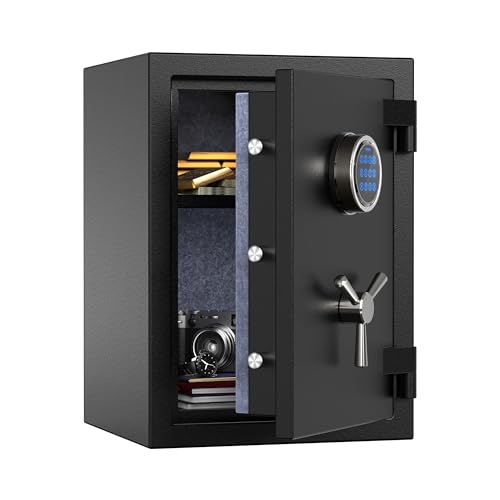
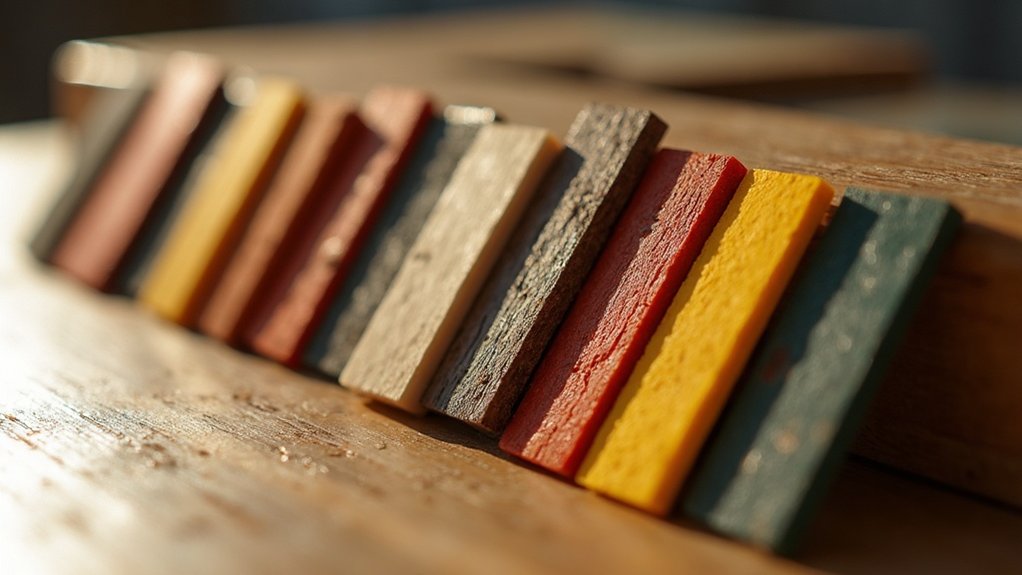
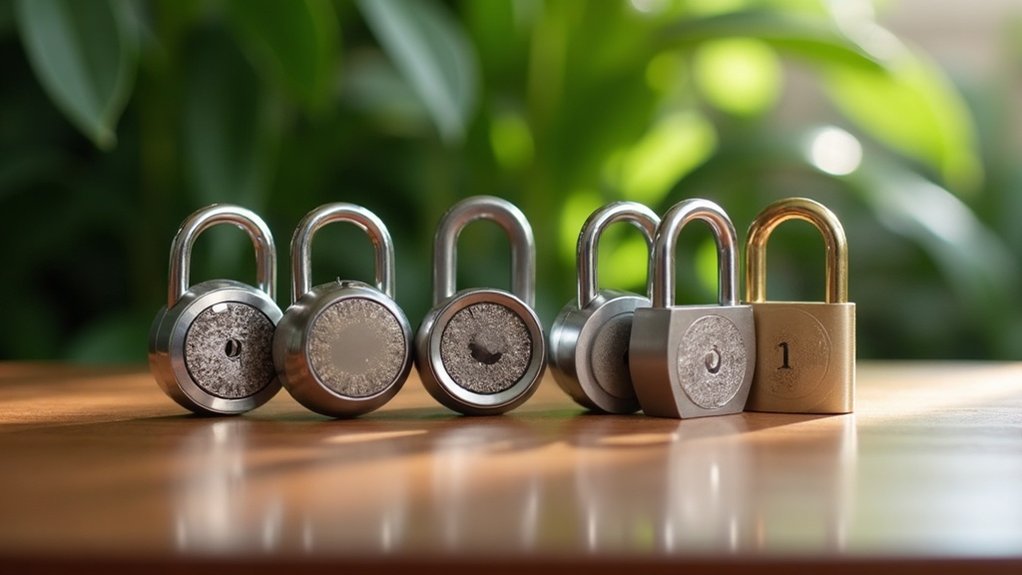
Fire safes are made from a blend of strong materials designed to withstand high temperatures and protect your valuables. Common components include steel for structural strength, gypsum board for heat resistance, and fire clay known for its melting point. Additionally, high-strength concrete and advanced insulation technologies, like DryLight®, are utilized to enhance fire protection. Understanding the specific materials can help you choose the right safe for your needs. There’s more to discover about advancements in fireproof materials.
Key Takeaways
- Fire safes commonly utilize materials like gypsum board, fire clay, and high-strength concrete for optimal fire resistance and structural integrity.
- Advanced composites combine steel and polymers to enhance heat resistance, offering improved performance in fireproofing.
- Ceramic fiber insulation is used to protect contents from extreme heat damage, contributing to fire safety.
- Innovative materials like DryLight® provide lightweight insulation with high fire ratings, balancing efficiency and protection.
- Fire-retardant sealants are employed to prevent smoke infiltration, enhancing overall safety for stored items.
The Importance of Fireproof Safes
When considering the safety of your most valuable possessions, investing in a fireproof safe is essential.
These safes offer unparalleled protection for irreplaceable items, such as legal documents and jewelry, from fire-related damage. They create a robust barrier, ensuring your contents remain intact even during extreme heat.
Understanding the materials used in fireproof safes is significant; advanced composites and high-temperature resistant insulations enhance their effectiveness.
The effectiveness of fireproof safes relies on advanced composites and high-temperature resistant insulations.
Rigorous testing and certification processes validate their ability to safeguard against prolonged exposure to flames.
Understanding Fireproof Materials
When selecting fireproof materials, you need to understand their properties and applications.
Common options like gypsum board and high-strength concrete offer varying degrees of fire resistance, while innovative advancements such as DryLight® enhance structural integrity.
Knowing the advantages of each material helps you make informed choices for ideal protection against fire hazards.
Common Fireproof Materials
Fireproof materials play an essential role in enhancing the safety and security of safes.
Common fire-resistant materials include:
- Gypsum board: Contains water that absorbs heat, providing fire resistance for 30 minutes to 2 hours when paired with thick steel.
- Fire clay: Known for its exceptional heat resistance, boasting a melting point of 3,002°F, it’s used in high-security safes for added protection.
- High-strength concrete: Utilized in TL-rated safes, its dense structure guarantees effective heat absorption and dissipation, enhancing fireproofing characteristics.
These materials collectively contribute to the overall integrity and resilience of fire safes against extreme temperatures.
Innovative Material Advancements
As advancements in technology continue to emerge, innovative fireproof materials are redefining the standards for safe construction and protection.
Fireproof safes now utilize materials like DryLight® and fire clay, enhancing fire resistance with impressive ratings. DryLight® offers a 2-hour ETL fire rating thanks to its lightweight insulation.
High-strength concrete in TL-15 and TL-30 safes guarantees exceptional thermal insulation and structural integrity. Additionally, ceramic fiber insulation safeguards against heat damage, while advanced composites combine steel’s strength with polymers’ heat resistance.
Fire-retardant sealants further prevent smoke infiltration, making these innovative material advancements essential for creating reliable, fire-resistant safes.
Common Materials Used in Fireproof Safes
When choosing a fireproof safe, you’ll encounter various materials that enhance fire resistance and structural integrity.
Common insulation materials like gypsum board and advanced options such as DryLight® are designed to protect against extreme heat, while high-strength concrete contributes to overall durability.
Additionally, innovative solutions like ceramic fiber insulation and fire-retardant sealants play essential roles in preventing smoke infiltration and ensuring thorough protection for your valuables.
Fire-Resistant Insulation Materials
To guarantee maximum protection against heat and flames, fire-resistant insulation materials play an essential role in the construction of fire safes.
These materials guarantee your valuables remain safe during a fire incident.
- Gypsum board (drywall) provides a fire rating of 30 minutes to 2 hours.
- Advanced fire-resistant materials like DryLight® enhance insulation without gaps.
- Fire clay, with a melting point of 3,002°F, offers exceptional heat resistance.
Structural Strength Components
Fire safes rely on a combination of robust materials to confirm both structural integrity and fire resistance.
Steel is a primary component, offering superior structural strength and impact resistance against forced entry.
Gypsum board, with its water content, enhances fire ratings, achieving protection for 30 minutes to 2 hours when paired with thick steel.
Advanced materials like DryLight® improve fire resistance while reducing weight.
Additionally, high-strength concrete provides exceptional fireproofing, boasting densities of 6,300 PSI and 9,300 PSI for TL-15 and TL-30 safes, respectively.
Fire clay, with a melting point of 3,002°F, guarantees enduring heat resistance in higher-end models.
Innovative Fireproof Solutions
Innovative fireproof solutions in safes leverage advanced materials that enhance both security and fire resistance.
These innovative materials not only protect your valuables but also withstand extreme conditions:
- DryLight®: A lightweight material that fills gaps between steel layers, improving fire protection.
- Fire Clay: With a melting point of 3,002°F, it guarantees exceptional heat insulation and durability.
- Advanced Composites: Combining steel’s strength with polymers and ceramics for superior fire resistance.
Different Types of Fireproof Safe Materials
While selecting a fireproof safe, understanding the materials used in its construction is essential for guaranteeing ideal protection. Common options include steel for structural integrity, while insulation layers like gypsum board enhance fire resistance through chemically-bound water molecules.
Advanced safes may utilize proprietary materials like DryLight®, which is lighter yet offers superior fireproof capabilities. Fire clay, with a melting point of 3,002°F, is effective against heat. High-strength concrete provides dense fireproofing, and innovative additions like ceramic fiber insulation and fire-retardant sealants enhance thermal resistance.
These diverse materials on the market guarantee thorough protection against fire and smoke.
Advantages and Disadvantages of Various Fireproof Safe Materials
When evaluating fireproof safe materials, it’s crucial to weigh their advantages and disadvantages to make an informed decision.
- DryLight® offers superior fire resistance and is lightweight, but may be less durable than heavier materials.
- Fire clay guarantees exceptional heat resistance but can be costly and difficult to work with.
- High-strength concrete enhances fire and burglary protection but adds significant weight.
- Gypsum board is cost-effective with decent fire ratings, though it lacks burglary resistance.
- Advanced materials like ceramic fiber insulation provide extensive protection but increase the overall cost.
Understanding these factors helps you choose the right fireproof materials for your needs.
Innovations in Fireproof Safe Materials
As manufacturers endeavor to enhance fire safety, they’re increasingly turning to advanced composite materials that merge the robust qualities of steel with the exceptional heat resistance of polymers and ceramics.
Innovations like the proprietary DryLight® material provide a lighter, more effective insulation solution, achieving a 2-hour ETL fire rating.
High-strength concrete, with a density 162% to 172% greater than drywall, offers superior fireproofing and burglary resistance.
Additionally, fire clay, with its melting point of 3,002°F, enhances fire protection.
The trend of integrating nano-enhanced fire-resistant coatings and fire-retardant additives further improves the effectiveness of modern fireproof safe materials.
The Future of Fireproof Safe Materials
The future of fireproof safe materials promises to revolutionize protective solutions by focusing on eco-friendly components that maintain high fire resistance. Innovations are set to enhance security with smart technology, offering features like remote monitoring.
Key developments include:
- Nano-enhanced fire-resistant coatings utilizing advanced chemical properties for superior protection
- Composite materials combining steel’s strength with ceramics and polymers for improved fire safety
- Lightweight, high-density materials that enhance fire protection without sacrificing portability
These advancements aim to create safes that not only endure extreme conditions but also align with environmental sustainability goals, providing you with peace of mind and security.
Related Articles
Exploring related articles can deepen your understanding of fire safe materials and their innovations.
Discover the latest innovations in fire safe materials and enhance your knowledge of their protective properties.
You’ll find in-depth discussions on materials like gypsum board, which offers fire resistance through dehydration, and advanced options such as DryLight®, designed to enhance structural integrity while remaining lightweight.
Articles on fire clay reveal its exceptional heat resistance, essential for high-density fireproof safes.
Additionally, high-strength concrete is explored for its superior fire protection capabilities, especially in TL-Rated safes.