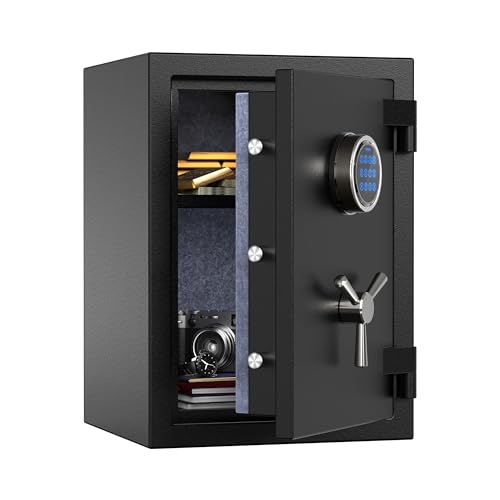
Data safes are specialized security devices designed to protect your valuable physical documents and digital media from fire, theft, and environmental damage. They come in various types, like Data Combi Safes and Fireproof Media Safes, each offering unique fire resistance ratings and protection features. With advanced locking mechanisms and water-resistant seals, they guarantee the safety of sensitive items. Choosing the right safe requires evaluating your specific needs, and there’s more to uncover about their installation and maintenance.
Key Takeaways
- Data safes are designed to protect physical documents and digital media from fire, water damage, and unauthorized access.
- They have specific fire ratings indicating their resistance to high temperatures, crucial for protecting sensitive materials.
- Types of data safes include Data Combi Safes, Fireproof Media Safes, and Standard Fire Safes, each serving different protection needs.
- Key features include advanced locking mechanisms, water-resistant seals, and adjustable shelving for efficient organization of valuables.
- Proper installation and anchoring are essential for maximizing security and meeting insurance requirements.
Understanding Data Safes
When you think about safeguarding sensitive information, data safes stand out as essential tools designed to protect both physical documents and digital media.
These fireproof safes undergo rigorous testing to establish their fire ratings, which indicate their ability to withstand extreme temperatures and potential explosions. Critical internal temperatures for protecting items are 175˚C for paper, 120˚C for digital media, and 52˚C for computer data.
Models like the Data Combi Safe offer fire protection for paper while insulating electronic items, ensuring thorough safeguarding.
Additional features, such as alarms and adjustable shelving, enhance security and functionality, catering to diverse storage needs.
Types of Data Safes
Understanding the various types of data safes is essential for selecting the right protection for your sensitive materials.
Selecting the right type of data safe is crucial for protecting your sensitive materials effectively.
Here are three significant types you should consider:
- Data Combi Safes: These provide fire protection for paper while insulating electronic media, maintaining lower internal temperatures.
- Fireproof Media Safes: Designed to resist extreme temperatures up to 1850°F, they protect against fire, humidity, and magnetic interference.
- Standard Fire Safes: While effective for physical valuables, they fall short for electronic media, which can be damaged at much lower temperatures.
Choose wisely to guarantee your data safes meet your specific needs.
Features of Data Safes
When evaluating data safes, you’ll want to focus on their fire resistance ratings and security features.
These safes undergo rigorous testing to withstand extreme temperatures while providing advanced locking mechanisms to deter unauthorized access.
Understanding these features will help you choose the right safe for your sensitive digital information.
Fire Resistance Ratings
Fire resistance ratings play an essential role in determining the effectiveness of data safes in protecting sensitive information from fire hazards.
Understanding these ratings helps you choose the right fireproof safe for your needs. Consider the following:
- Certifications like EN 15659 and LFS 30 P indicate 30 minutes of fire protection for paper and media safes.
- Media safes must keep internal temperatures below 125°F to safeguard electronic items.
- Proven models withstand temperatures of 1090°C, guaranteeing the temperature inside remains under 30°C during testing.
Selecting a certified safe guarantees your records are protected against extreme fire conditions.
Security Features Overview
Data safes combine robust security features to guarantee the protection of sensitive information against unauthorized access and environmental threats. Equipped with push-button electronic locks and key day locks, these safes enhance access control considerably.
Many models include alarms that activate upon unauthorized movement, adding another layer of security. For fire protection, data safes withstand extreme temperatures up to 1850°F, ensuring internal safety for electronic media.
Additionally, water-resistant seals protect contents from damage caused by sprinkler systems or fire hoses. With removable shelves, you can efficiently organize items while safeguarding them from scratches and potential harm.
Choosing the Right Data Safe
When choosing the right data safe, you must first assess your protection needs based on the specific items you want to secure.
Evaluate access options to guarantee the safe meets both security and usability requirements, while also considering installation requirements for proper anchoring and compliance with fire protection standards.
This thorough approach will help you select a safe that effectively safeguards your valuable data.
Assessing Protection Needs
How do you determine the right data safe to meet your specific protection needs?
Start by evaluating your storage needs, considering the types and quantities of items you want to secure.
Next, assess the required protection level against fire and burglary, focusing on safes designed to protect electronic media with a suitable fire rating.
Finally, choose a locking mechanism that fits your access preferences to enhance security.
- Evaluate your storage needs.
- Review fire ratings and certifications.
- Select the appropriate locking mechanism.
These steps guarantee you choose a data safe that provides ideal protection for your valuables.
Evaluating Access Options
What access options best meet your security and convenience needs? When choosing a data safe, consider key locks, keypad entry, or biometric fingerprint scanners.
Key locks provide simplicity but may require backup keys for battery changes. Keypad entry offers convenience, often including tamper alarms, while biometric fingerprint scanners enhance security through unique user identification.
Evaluate how often you’ll access the safe versus the security level required; higher security can complicate quick access.
Verify your selected option aligns with its intended purpose, whether for home use or a business environment, and always check the manufacturer’s specifications for durability and reliability.
Considering Installation Requirements
Although selecting the right data safe is essential for securing your valuables, understanding the installation requirements is equally important.
Proper installation guarantees ideal fire safe performance and burglary protection, maintaining your insurance coverage.
Consider these key aspects:
- Weight: Heavy safes may need professional installation to anchor securely.
- Location: Choose a solid surface to prevent tipping during a fire.
- Internal Features: Evaluate adjustable shelving for organization and protection.
Installation and Security Considerations
When installing a data safe, verifying its proper placement is essential to maintain both its security and your insurance coverage.
Heavy safes often require professional installation to guarantee secure placement. Anchor your safe to solid surfaces using pre-drilled holes to enhance stability and deter theft.
Professional installation is crucial for heavy safes; secure them to solid surfaces for enhanced stability and theft deterrence.
When selecting a lock, consider options like key locks, keypads, or fingerprint access to align with your security needs.
Remember, fire safes have limitations on bolting that may affect fire protection, so balance security and fire safety.
Regularly maintain access methods, like backup keys or battery replacements, to verify your data safe remains functional.
Benefits of Using Data Safes
Investing in a data safe offers crucial benefits for safeguarding your electronic media, ensuring that sensitive information remains protected against various threats.
Here are three key benefits:
- Fire Resistance: Data safes can withstand temperatures up to 1850°F for 2 hours, keeping internal temperatures below 125°F to protect hard drives and important paper documents.
- Water Damage Protection: With water-resistant seals, they guard against damage from fire hoses and sprinklers.
- Cost Efficiency: By preventing costly data loss, data safes are essential for both personal and business records, securing your critical information effectively.