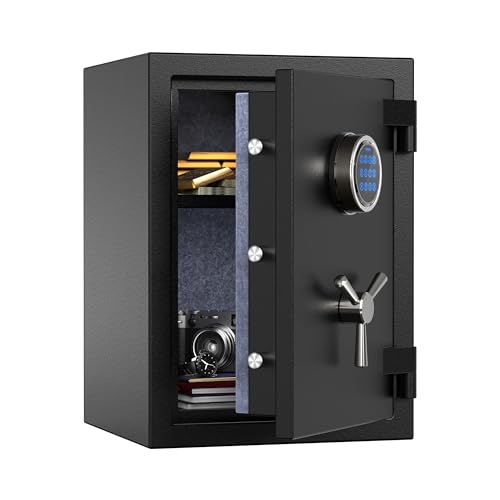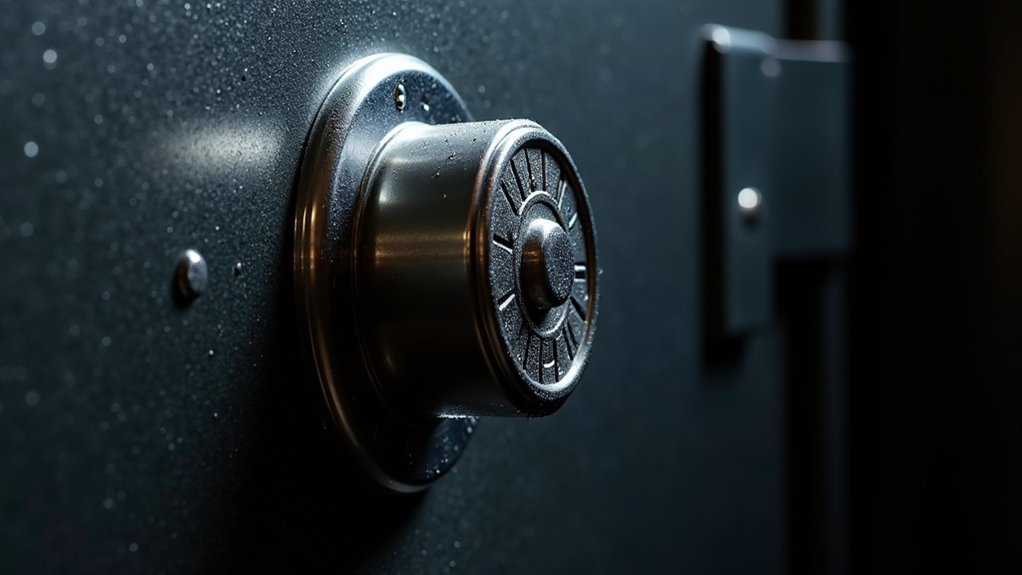
Combination lock safes are mechanical security devices that protect your valuables through a series of dial rotations. By aligning notches on multiple wheels, they disengage the locking mechanism, allowing access. These safes typically feature durable designs and reliable operation, making them a popular choice. You can find different types, including mechanical, electronic, and biometric locks, each with unique advantages. Discovering which type suits your needs can enhance your security system considerably.
Key Takeaways
- Combination lock safes use a mechanical design with a wheel pack mechanism for reliable security against unauthorized access.
- These safes require a specific sequence of dial turns to align notches on multiple wheels, allowing access when correctly entered.
- Mechanical combination locks offer durability, lasting decades without the need for physical keys, reducing risks of loss and duplication.
- Changing the combination is simple, providing flexible access management while maintaining strong security against picking.
- Different types of combination locks, including mechanical, electronic, and biometric, cater to varied security needs and user convenience.
Overview of Combination Lock Safes
When you consider the security of your valuables, combination lock safes stand out due to their robust mechanical design and reliability.
Combination lock safes provide exceptional security for your valuables with their durable mechanical design and dependable functionality.
These safes utilize a wheel pack mechanism, where a combination dial connects to a spindle and interacts with multiple wheels. Each wheel has notches that align when you dial the correct sequence, allowing the locking mechanism to disengage.
A metal fence in the mechanism guarantees the safe door remains locked until the correct combination is entered.
Commonly found in home safes, Group 2 locks offer simple combinations, while Group 1 locks enhance security with more complex, multi-number combinations.
Types of Combination Locks
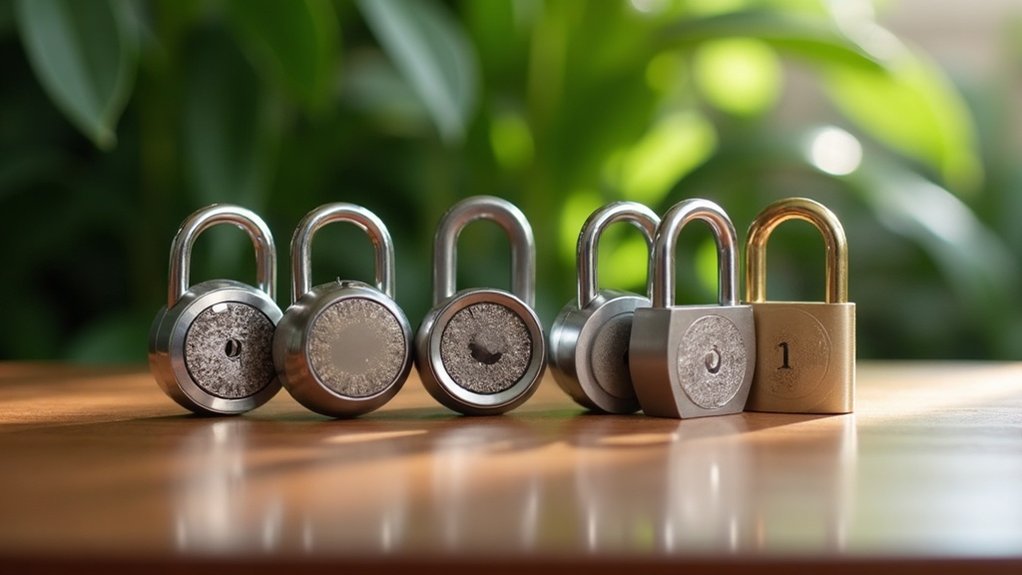
Understanding the different types of combination locks is essential for selecting the right safe for your needs. Here are three primary types you should consider:
- Mechanical Combination Locks: These use rotating discs with notches that align to release, often found in traditional safes.
- Electronic Combination Locks: Operated via keypads, these locks require a numeric sequence for access, offering convenience and security.
- Biometric Combination Locks: Utilizing fingerprint recognition, these allow for quick, one-touch entry while storing multiple authorized fingerprints for enhanced security.
Choosing the right combination lock guarantees your safe provides peak protection for your valuables.
Mechanism of Wheel Pack
The mechanism of the wheel pack is vital for the operation of mechanical combination locks. When you turn the combination dial, the drive cam rotates with the spindle, engaging the drive pin connected to the wheels in the wheel pack.
Each wheel features notches that must align with adjacent wheels to disengage the locking mechanism. This precise alignment is imperative, and the process of picking up the wheels guarantees that all necessary notches line up correctly.
Only when the wheels are properly aligned can the locking mechanism be released, allowing you access to the contents of the safe.
Locking and Unlocking Process
When you turn the combination dial, you’re setting off a precise sequence that aligns notches on multiple wheels within the safe.
This alignment allows the fence to disengage, clearing the path for the bolt to move freely.
Understanding this locking and releasing process is essential for effectively using a combination lock safe.
Notch Alignment Mechanism
A precise notch alignment mechanism is essential for the effective locking and releasing of combination locks.
When you dial the correct combination, the following occurs:
- The drive pin spins, engaging with adjacent wheels.
- Notches line up with corresponding gaps, allowing the fence to drop.
- The bolt can then move freely, disengaging the locking system.
This alignment process has been a reliable method for securing safes against unauthorized entry for nearly a century.
Fence Engagement Process
Understanding the fence engagement process is vital for grasping how combination locks secure safes. The fence, a metal bar positioned above the wheels, prevents the safe door from opening until the correct combination is dialed.
When the notches on the wheels align properly, a gap forms, allowing the fence to drop and disengage from the bolt’s path. This alignment is essential; it determines whether the bolt can slide freely, enabling access to the safe.
Once you dial the right combination, the wheels’ movement causes the fence to fall, allowing the bolt to retract and the safe to open smoothly.
Bolt Movement Release
Though it may seem straightforward, the bolt movement release process in combination lock safes is a complex interaction of mechanical components.
When you dial the correct combination, the notches on the wheels align, allowing the metal fence to drop. This disengagement is essential for the bolt to move freely, enabling the safe to open.
Here’s how it works:
- Dial the combination precisely to align notches.
- The fence drops into the created gap.
- The bolt can then slide away from the locking mechanism.
Understanding this process emphasizes the importance of accuracy when using combination locks in safes.
Advantages of Combination Locks
While many security options exist, combination locks stand out due to their unique advantages.
Mechanical locks offer remarkable durability, often lasting decades thanks to their simple design with no electronic components. Without physical keys, you reduce the risk of loss and unauthorized duplication, enhancing overall security.
Changing the combination is straightforward, providing flexibility in managing access to your secure valuables. Additionally, combination locks are generally more resistant to picking, making them a reliable choice for safeguarding your belongings.
With no batteries to fail, you can trust in their consistent functionality over time, reinforcing their status as a dependable security solution.
Limitations of Combination Locks
While combination locks are generally reliable, their lack of significant technological advancements since the 1800s makes them vulnerable to experienced burglars who know how to exploit their weaknesses.
Additionally, changing the combination can be complex, often requiring a locksmith’s help, which adds both time and expense.
These limitations highlight the need for careful consideration when choosing a security solution.
Vulnerability to Experienced Burglars
As combination locks have remained largely unchanged for over a century, they can be particularly vulnerable to experienced burglars who understand their mechanisms.
Skilled safecrackers exploit these vulnerabilities in various ways:
- Timing: They can time the dial turns to discover when the combination is dialed correctly.
- Sound: Listening closely, they detect the alignment of wheels in mechanical locks.
- Observation: They may observe keypress patterns on electronic locks, compromising your security.
While these locks are often considered reliable, their static nature makes them a target for those who know how to take advantage of their weaknesses.
Complexity in Combination Changes
Although combination locks provide a sense of security, their limitations in changing combinations can pose significant challenges for users.
The complexity in combination changes is particularly evident with mechanical combination locks, which often require a locksmith for assistance. Unlike electronic locks that allow quick updates, changing a mechanical lock’s combination can be cumbersome.
Additionally, if you make mistakes while entering the combination, you must restart the entire process—frustrating and time-consuming. You may also struggle to remember complex sequences, increasing the risk of unauthorized access if the combination is disclosed.
Regular updates and ease of use are essential for effective security management.
Choosing the Right Safe
Selecting the right safe requires careful consideration of several key factors that align with your specific needs.
Here are three important aspects to evaluate:
- Lock Type: Decide between combination, electronic, biometric, or key locks based on security features and ease of use.
- Size: Assess the volume of items you need to store and the available space in your home or office.
- Budget: Mechanical locks are standard, while electronic locks may cost an additional $100 to $200.