Burglary classification ratings for safes inform you about their security levels. These ratings, like RSC, TL-15, and TL-30, indicate how long a safe can resist unauthorized access using common tools. An RSC rating signals a minimum five-minute defense against basic attacks, while TL-15 and TL-30 safes offer protection for 15 and 30 minutes, respectively. Higher ratings, such as TLX6, enhance security further. Understanding these ratings helps you make informed choices about safe investments. There’s more to uncover.
Key Takeaways
- Burglary classification ratings for safes indicate their resistance to unauthorized access and are essential for evaluating security levels.
- RSC-rated safes withstand at least a 5-minute attack with basic tools, offering entry-level protection.
- TL-15 and TL-30 ratings signify safes that resist intrusion for 15 and 30 minutes, respectively, providing enhanced security.
- TLX6 and TR ratings offer superior construction, suitable for high-value items requiring extra protection.
- Insurance companies often mandate specific burglary ratings to determine coverage and premiums for stored items.
Understanding Safe Burglary Ratings
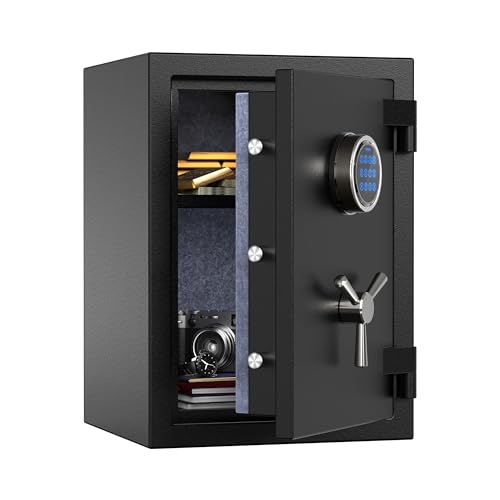
When it comes to securing your valuables, understanding safe burglary ratings is essential, as these ratings directly indicate the level of protection a safe offers against unauthorized access.
Safes are classified into categories like RSC and UL-rated classifications, including TL-15. RSC-rated safes withstand a 5-minute attack using common burglary tools, while TL-15 safes endure a robust 15-minute test.
Higher ratings, such as TL-30X6, reflect enhanced security features and construction standards. Insurance companies often require these ratings to determine coverage levels, making it vital for you to choose high-security options for best protection against theft.
Types of Safes and Their Ratings
Understanding safe burglary ratings lays the groundwork for exploring the various types of safes available and their corresponding security classifications.
Safes are categorized by burglary ratings like B-Rate, C-Rate, and RSC, each providing different levels of security. RSC-rated safes withstand attacks for at least five minutes using common tools, with RSC I and II indicating resistance against one or two attackers, respectively.
For higher security, TL-15 and TL-30 safes resist intrusion for 15 and 30 minutes, respectively. TLX6 and TR ratings, such as TRTL-30-X6, offer enhanced protection, making them ideal for securing valuable items and meeting insurance requirements.
RSC Ratings Explained
RSC ratings categorize safes into three distinct levels, each reflecting their ability to withstand attacks using common burglary tools.
Understanding the testing procedures behind these ratings is essential, as they simulate real-world break-in scenarios with experienced technicians.
This knowledge empowers you to choose a safe that meets your security needs effectively.
RSC Rating Levels
While selecting a safe for your home, it’s crucial to evaluate the RSC rating levels that define their security capabilities.
RSC ratings assess a safe’s ability to resist break-ins using common mechanical tools. RSC Level 1 safes provide minimal burglary protection, enduring a 5-minute attack from one person with basic tools.
In contrast, RSC Level 2 safes offer superior resistance, withstanding a 10-minute attack by two individuals using advanced tools.
These ratings stem from standardized testing by Underwriters Laboratories (UL), ensuring reliable security claims for protecting your residential valuables from unauthorized access.
Choose wisely based on these levels for maximum security.
Testing Procedure Overview
To accurately assess the burglary resistance of safes, a rigorous testing procedure is employed that simulates real-world break-in scenarios.
The testing process evaluates safes against common hand tools, measuring their ability to withstand unauthorized access. RSC ratings provide benchmarks for insurance companies and consumers alike.
For example, RSC Level 1 safes must endure a five-minute assault by one person, while RSC Level 2 requires ten minutes against two individuals. Higher safe ratings indicate superior protection, helping consumers make informed decisions regarding minimum resistance levels and overall security.
Understanding these ratings enhances your ability to choose a safe that meets your needs.
TL Ratings and Their Significance
When evaluating a safe’s security, TL Ratings provide critical insights into its effectiveness against burglary attempts.
These ratings indicate how long a safe can withstand attacks with common tools, which is essential for safeguarding your valuable items.
Understanding TL Ratings helps you make informed decisions based on the level of protection you need.
TL Ratings Overview
Understanding TL ratings is essential for anyone considering the purchase of a safe. Established by Underwriters Laboratories, these ratings indicate how long a safe can withstand attacks using common burglary tools. For example, TL-15 rated safes resist entry for at least 15 minutes, while TL-30 rated safes provide protection for at least 30 minutes. TL-30X6 safes enhance security with six-sided protection against break-ins, ideal for high-value items. Here’s a quick overview:
| TL Rating | Time Resistance |
|---|---|
| TL-15 | 15 minutes |
| TL-30 | 30 minutes |
| TL-30X6 | 30 minutes (6 sides) |
| TLTR-30X6 | 30 minutes (torch resistance) |
| UL Listed Group 2M | Required for TL-30X6 |
Importance of TL Ratings
While the security of your valuables hinges on the quality of the safe you choose, TL ratings serve as a critical benchmark for evaluating that quality.
TL-15 and TL-30 ratings indicate a safe’s resistance to burglary attempts for 15 and 30 minutes, respectively, using common tools. Recognized by Underwriters Laboratories, these ratings guarantee the safe meets strict construction requirements, including robust locking mechanisms and wall thickness.
Higher TL ratings correspond to increased security capabilities, making TL-15 suitable for items valued over $25,000, while TL-30X6 is often recommended for contents exceeding $150,000.
Your valuables deserve that protection.
Advanced Ratings: TLX6 and TR Ratings
Advanced ratings like TLX6 and TR ratings play an essential role in determining the security of safes designed for high-value assets. Here’s what you need to know:
- TLX6 safes protect all six sides, suitable for items over $150,000.
- TL-30X6 can withstand a 30-minute attack from experienced individuals.
- TR ratings indicate enhanced security measures beyond TL ratings.
- TRTL-30X6 offers resistance against tools and torches for 30 minutes.
These advanced classifications are vital for safe selection and often influence insurance coverage, ensuring your high-value items are well protected against potential burglary threats.
Importance of Safe Ratings for Insurance
When selecting a safe, recognizing the importance of its rating can greatly influence your insurance coverage and premiums. Insurers often recommend specific safe ratings, especially when storing high-value items, as these ratings reflect the protection offered against burglary attempts.
Safes with UL ratings, like TL-15 or TL-30, showcase enhanced security features, potentially lowering your insurance costs. Additionally, having a safe with a recognized burglary rating can expedite claims, as insurers require documented evidence of security measures.
Regular updates to safe ratings guarantee compliance with evolving insurance policies, helping you adapt to changing risks effectively.
Selecting the Right Safe for Your Needs
Choosing the right safe for your needs involves a careful assessment of both the value of your belongings and the specific security features that will best protect them.
Selecting the ideal safe requires a thoughtful evaluation of your valuables’ worth and essential security features.
Consider the following factors:
- Burglary Rating: Match the safe’s rating to your valuables’ worth.
- Construction Materials and Thickness: Look for sturdy steel, with at least 1/2-inch thickness.
- Dimensions: Guarantee the safe fits your space and accounts for weight.
- Security Needs: Evaluate threats in your area; choose higher-rated safes if necessary.
Regularly reassess your security needs to guarantee your safe remains adequate as your collection or local crime rates change.