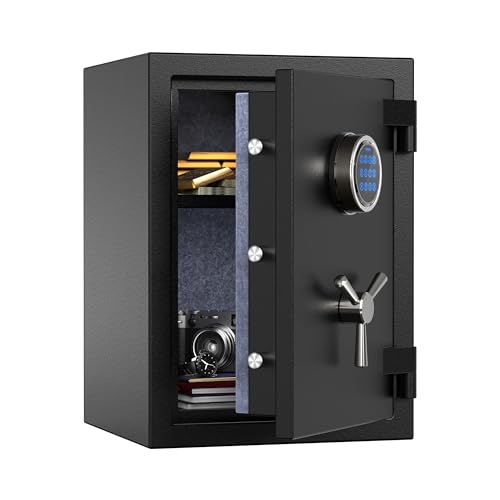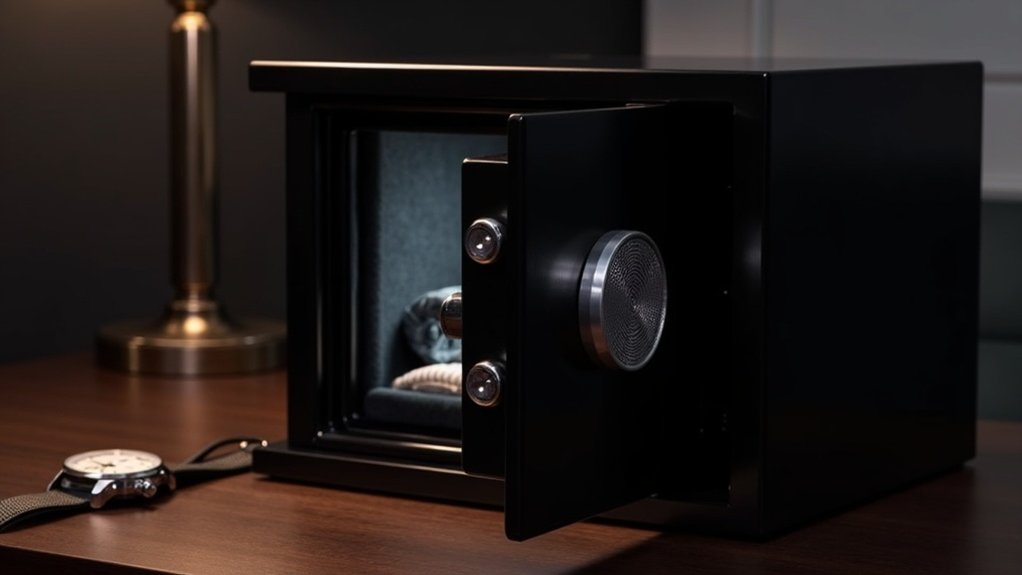
Biometric safes use fingerprint scanning technology to provide quick and secure access to stored items, setting them apart from traditional safes. When you present your fingerprint to the scanner, it rapidly compares it to pre-registered images. If there’s a match, you gain access within seconds. These safes support multiple users, enhancing convenience. However, they require regular maintenance and can be sensitive to false scans. There’s much more to explore about their operation and emerging technologies.
Key Takeaways
- Biometric safes use fingerprint scanning technology for secure access, eliminating the need for keys or codes.
- They compare presented fingerprints to stored authorized images for quick access, typically in under a second.
- Different types of biometric scanners exist, including capacitive, optical, and ultrasonic, each with unique strengths and weaknesses.
- These safes allow multiple user registrations, enhancing access control for shared environments while maintaining high security.
- Regular maintenance and battery monitoring are essential to prevent unexpected power loss and ensure optimal performance.
Understanding Biometric Safes
As you explore the world of security solutions, you’ll find that biometric safes stand out for their innovative use of biological features, primarily fingerprint scanning, to grant access.
These safes employ a sophisticated locking mechanism that records and compares the presented biometric scans against pre-set authorized images. This technology allows multiple users to store their fingerprints, facilitating shared access to the safe among family members or trusted individuals.
Biometric safes allow multiple users to store fingerprints, enabling convenient shared access for family and trusted individuals.
In addition, biometric safes utilize encrypted digital formats to securely store detailed fingerprint images, reinforcing protection against unauthorized access.
Regular maintenance, such as battery checks and scanner cleaning, is essential for peak performance.
How Biometric Safes Operate
Biometric safes operate through a precise mechanism that scans and recognizes unique biological features, primarily fingerprints, to provide secure access.
When you present your fingerprint to the scanner, the biometric technology compares it to pre-set authorized images stored in an encrypted format. If there’s a successful match, the locking system disengages, granting you access in under a second.
Advanced models may allow multiple fingerprint enrollments, enabling family members to access the safe.
With high-resolution scanners, particularly those with higher DPI, these safes enhance security against duplicates and false readings, ensuring that only authorized users can access the contents.
Types of Biometric Scanners
When choosing a biometric safe, understanding the different types of scanners available is essential for making an informed decision.
Here are the main types:
- Capacitive fingerprint scanners: Fast and reliable; they scan in under a second and resist false prints.
- Optical fingerprint scanners: Affordable but less reliable, capturing images with light, making them vulnerable to molds.
- Ultrasonic fingerprint scanners: Use sound waves for 3D imaging; they work through thin surfaces but are generally slower.
- Fingerprint recognition: Each scanner type has its strengths and weaknesses, with capacitive scanners being the most dependable option for security.
Advantages of Biometric Safes
When considering biometric safes, you’ll notice several key advantages that enhance both security and convenience.
Their quick access capabilities allow you to open the safe in seconds, while eliminating the need for keys or codes reduces the risk of unauthorized access.
Additionally, the advanced technology behind these safes guarantees a reliable and secure solution that can accommodate multiple users through fingerprint registration.
Quick Access Benefits
How quickly can you access your valuables in an emergency? Biometric safes allow you to gain entry to your safe within seconds using a fingerprint biometric scan, providing quick access when you need it most.
This technology eliminates the hassle of keys and combinations, ensuring you won’t forget or lose access.
- Supports multiple users for family convenience
- Uniqueness of fingerprints enhances security
- Ideal for urgent situations, like accessing firearms
- Streamlines the process of retrieving valuables
These benefits of biometric safes make them a practical choice for anyone prioritizing fast, secure access to their important items.
Enhanced Security Features
While traditional safes rely on physical keys or combinations that can be lost or forgotten, biometric safes leverage advanced technology to provide superior security.
Biometric safes use unique biological features, primarily fingerprints, ensuring only authorized users access their contents. With high DPI fingerprint scanners, these safes considerably reduce false scans, enhancing security against unauthorized entry.
They can store multiple fingerprints, allowing family access while maintaining stringent security levels. By relying on inherent personal traits, biometric safes eliminate concerns associated with lost keys or forgotten codes, making them a robust option for safeguarding valuables in various situations.
Keyless Convenience
Isn’t it time to rethink the way you secure your valuables? Biometric safes offer keyless convenience, allowing you to access your belongings with just a fingerprint. This technology eliminates the hassle of forgotten codes or lost keys.
Here are some key benefits:
- Quick access for multiple authorized users
- Emergency retrieval in seconds
- Unique biometric data offers enhanced security
- High consumer approval ratings for reliability
With a quality scanner, these safes guarantee that only you and trusted individuals can access your valuables, making them a modern solution for secure storage that adapts to your lifestyle.
Disadvantages of Biometric Safes
Although biometric safes offer advanced security features, they come with several disadvantages that users should consider.
First, these safes typically rely on battery power, necessitating regular maintenance to guarantee access to the safe isn’t compromised.
Additionally, false scans can occur, particularly in lower-quality models, leading to unauthorized access or failure to recognize authorized users.
Environmental factors, such as dirty fingerprints, can hinder performance, while older people or those with worn fingerprints may struggle with biometric recognition.
Finally, the sophisticated technology often results in higher prices compared to traditional mechanical or digital locks, making biometric safes a more expensive investment.
Comparing Biometric Safes to Traditional Safes
When comparing biometric safes to traditional safes, it’s crucial to understand the key differences in their access mechanisms and overall reliability.
- Access Speed: Biometric safes open in seconds, while traditional safes may take longer.
- User Flexibility: Biometric safes allow multiple users through fingerprint enrollment, unlike most traditional safes.
- Reliability: Traditional safes generally avoid tech vulnerabilities, as they don’t rely on batteries.
- Cost: Biometric safes tend to be pricier due to advanced technology compared to more affordable traditional safes.
Understanding these pros and cons helps you make an informed decision tailored to your needs.
Key Features to Consider When Choosing a Biometric Safe
When choosing a biometric safe, reliability of fingerprint scanners is vital for preventing unauthorized access while ensuring quick entry for authorized users.
You should also consider multi-user access capability, which allows family members or trusted individuals to store their fingerprints for convenience.
Finally, battery life considerations are essential; selecting a safe with a battery monitoring system helps avoid unexpected access issues due to low battery levels.
Reliability of Fingerprint Scanners
Choosing a biometric safe requires careful consideration of the fingerprint scanner‘s reliability, as it directly impacts your security. Here are key factors to evaluate:
- Opt for a biometric fingerprint scanner with capacitive technology for quick scans and fewer false positives.
- Look for high DPI scanners to enhance security by reducing duplication risks.
- Confirm the safe includes a backup access method, like a keypad or mechanical key, for emergencies.
- Check reliability ratings and battery life features, including indicators to avoid unexpected power loss.
Prioritizing these elements will help you select a safe that reliably protects your valuables.
Multi-User Access Capability
Reliability in fingerprint scanners is just one aspect of biometric safes; multi-user access capability greatly enhances the functionality and versatility of these security devices.
Biometric fingerprint safes allow you to enroll multiple fingerprints, accommodating family members or authorized personnel, which boosts convenience and accessibility. Many advanced models can store up to ten fingerprints, guaranteeing quick access in emergencies without the hassle of keys or codes.
Furthermore, the ability to easily add or revoke access is essential for maintaining security. Consider the ease of programming for adding fingerprints when selecting a safe to guarantee manageable user access.
Battery Life Considerations
Ensuring your biometric safe operates efficiently hinges on understanding battery life considerations. Regularly monitoring battery levels is essential to prevent unexpected power loss and maintain accessibility.
High-quality biometric devices can last several months to years, depending on usage. Look for features that enhance battery management:
- Battery monitors that alert you when levels are low
- Easy battery replacement options
- Backup access methods in case of battery failure
- Dual power options to connect to an outlet for continuous power
The Future of Biometric Security Solutions
As advancements in artificial intelligence and machine learning continue to evolve, the future of biometric security solutions promises to deliver unprecedented levels of accuracy and speed in recognition systems.
Emerging technologies such as 3D facial recognition and vein pattern recognition will enhance biometric identification methods.
Emerging technologies like 3D facial recognition and vein pattern recognition are set to revolutionize biometric identification methods.
With increasing privacy concerns, decentralized biometric systems are gaining traction, empowering users to control their biometric data and mitigate breach risks.
Additionally, the integration of biometric technology with Internet of Things devices will streamline access control in smart environments, while improvements in sensor technology guarantee reliable performance across diverse conditions and user traits.