The most common safe locking mechanisms include dial/combination locks, digital number keypad locks, biometric locks, key locks, and Bluetooth access locks. Each offers different levels of security and convenience. Dial locks guarantee reliability but require focus for input. Digital keypads allow for quick access and customizable codes. Biometric locks provide high security through unique identifiers but can be costly. Key locks are user-friendly but pose risks of key loss. For the latest insights on these options, explore further.
Key Takeaways
- Dial/Combination locks offer a high level of security with millions of possible combinations, requiring careful input for access.
- Digital number keypad locks provide quick access with customizable codes and include low battery alerts for maintenance reminders.
- Biometric locks enhance security by using unique personal identification features like fingerprints or retinal scans, although they can be more expensive.
- Key locks are a cost-effective option for straightforward access but come with risks of key loss or theft.
- Bluetooth access locks allow users to unlock safes with smartphones, offering modern convenience and enhanced security features through mobile apps.
Dial/Combination Locks
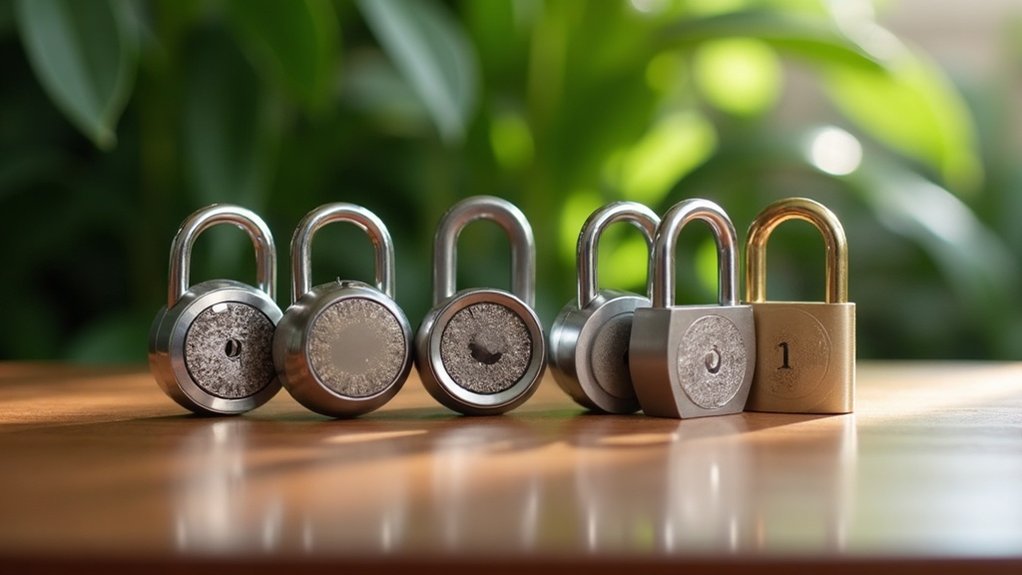
When considering safe locking mechanisms, dial or combination locks stand out due to their impressive security features and reliability.
These mechanical locks offer a high level of security, with up to one hundred million combinations available on a four-wheel dial lock. To gain entry, you need to input the correct combination, demanding focus and concentration.
Combination locks provide exceptional security with up to one hundred million combinations, requiring careful input for access.
Their reliability and durability make them a preferred choice for securely stored valuables. Avoid writing down combinations to prevent unauthorized access, as this can create vulnerabilities.
Unlike electronic locks, combination locks function consistently without batteries, ensuring quick access during power outages or emergencies.
Digital Number Keypad Locks
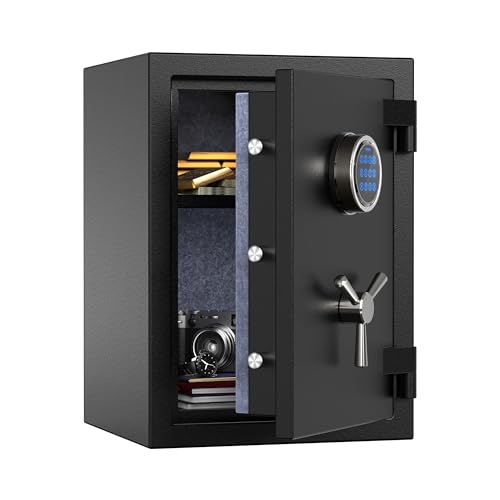
While dial or combination locks provide robust security, digital number keypad locks offer a modern alternative that enhances both convenience and functionality. These locks allow for quick and convenient operation, requiring a specific numeric sequence for access. They feature customizable codes, enabling easy updates to bolster security measures. Many models include advanced features like low battery alerts and time delays, preventing unauthorized access. This higher level of security makes them increasingly popular in residential and commercial safes.
| Feature | Benefit | Usage |
|---|---|---|
| Customizable Codes | Enhanced security | Multiple users |
| Low Battery Alert | Prevents lockouts | Maintenance reminders |
| Time Delays | Mitigates unauthorized access | Increased safety |
Biometric Locks
Biometric locks provide a cutting-edge solution for secure access by utilizing unique personal identification features, like fingerprints or retinal scans.
These advanced technology locks enhance security, guaranteeing that only authorized users can gain entry, thereby minimizing unauthorized access.
However, their complexity often results in higher costs compared to traditional locks.
The intricate design of biometric locks typically leads to increased expenses when compared to standard locking mechanisms.
You’ll need to take into account regular maintenance, as environmental factors like moisture and temperature can affect performance.
Although they offer convenience, occasional access issues may arise due to false acceptance or rejection rates.
Proper upkeep is essential to guarantee these locks function reliably and maintain the high security you expect.
Key Locks
After exploring the advanced features of biometric locks, it’s important to contemplate more traditional methods of securing your space, like key locks. Key locks use a specific key for a straightforward method of access, making them a cost-effective option. However, they carry security risks, including potential key loss or theft and vulnerabilities to lock picking. Spare keys can easily fall into unauthorized hands, raising concerns. While they may not provide the highest security level, key locks can serve as a reliable backup locking system.
| Pros | Cons | Best Use |
|---|---|---|
| Cost-effective | Vulnerable to picking | Secondary security |
| User-friendly | Key loss risk | Simple access |
| Easy to install | Unauthorized access | Backup system |
Bluetooth Access Locks
As technology evolves, Bluetooth access locks emerge as a modern solution for securing spaces, allowing you to gain access to safes effortlessly using your smartphone or tablet.
These electronic locks utilize a unique electronic key (eKey) stored in the PCB controller, ensuring secure access resistant to hacking attempts. Compatible with both iOS and Android, they offer versatility for many users.
Operating without constant WiFi, Bluetooth access locks enable secure access even in remote locations. Enhanced security features include user access management and entry logs through a mobile app, making them ideal for shared environments where multiple users need controlled access.