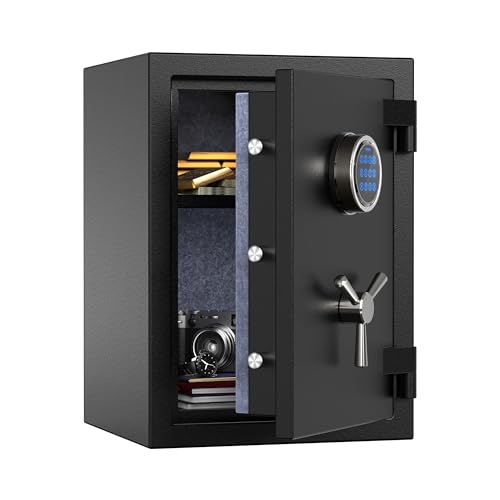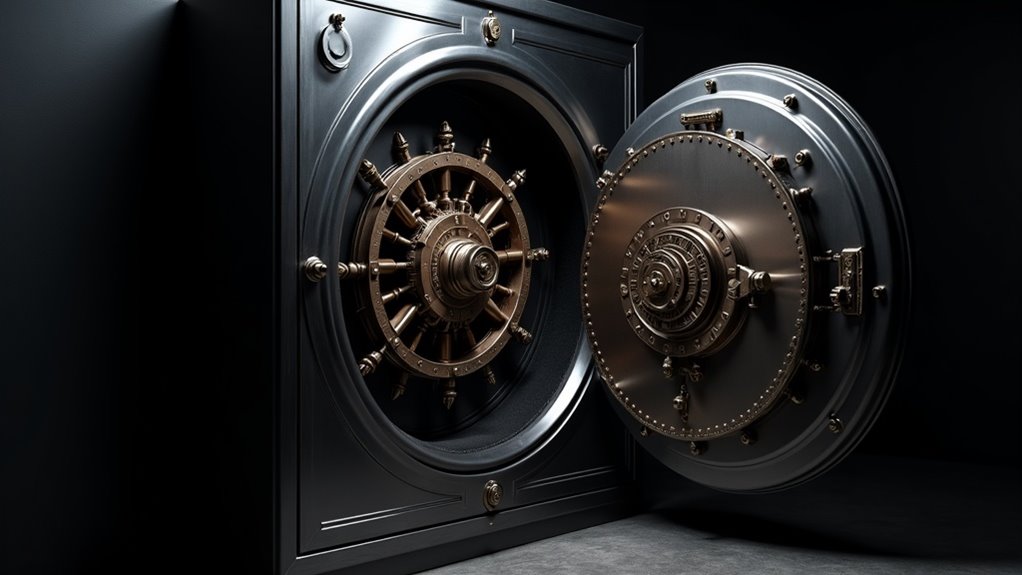
A time lock vault‘s a high-security container that prevents access to valuables until a set time elapses. This design protects against unauthorized entry and theft. You can find both mechanical and electronic versions, each utilizing independent timers for reliability. Mechanical locks rely on gears, while electronic models offer programmability and user-friendly displays. With advanced features, these vaults enhance security in banks and jewelry stores. Stay with us to uncover more about their operation and benefits.
Key Takeaways
- A time lock vault is a high-security container that restricts access until a predetermined time has passed.
- It features independent timers for redundancy, ensuring robust security against unauthorized entry.
- Time lock vaults can be mechanical or electronic, with varying functionalities and programmability.
- They are historically significant in preventing bank robberies and securing valuable assets.
- Regular maintenance is essential for the reliability and effectiveness of time lock vaults.
Definition and Functionality of Time Lock Vaults
A time lock vault is fundamentally a high-security container designed to restrict access until a specified time has passed, which means that knowing the combination isn’t enough to gain entry.
The locking mechanism features independent timers that guarantee redundancy; the first timer to reach zero grants access. Time locks can be mechanical, offering basic timing functions, or electronic, providing advanced programmable timers for improved accuracy.
These vaults became essential in the late 19th century to prevent coercion during bank robberies. Commonly used in banks and jewelry stores, time lock vaults enhance security by tightly controlling access to valuable items.
Purpose and Importance in Security
While ensuring the security of valuable assets, time lock vaults play an essential role in preventing unauthorized access. These systems utilize time locks to remain securely locked until a predetermined time is reached, thwarting attempts to access valuables, even with the correct combination.
Historically significant, time locks emerged to prevent bank robberies, showcasing their importance in high-security environments. Modern iterations, available in mechanical and electronic forms, provide enhanced programmability and accuracy.
Regular maintenance is important, ensuring reliability and maintaining ideal security for high-value items stored within vaults. Consequently, time locks remain a fundamental component in modern security strategies.
Mechanism and Operation of Time Locks
In a time lock vault, the timer functionality is vital, as it restricts access until the designated time expires, regardless of any attempted combinations.
You’ll appreciate the access control features that enhance security, providing a robust barrier against unauthorized entry.
Furthermore, the redundancy built into these systems, often through multiple timer movements, guarantees that even if one component fails, the vault remains secure.
Timer Functionality Explained
Understanding the timer functionality in a time lock vault is essential for grasping how these security mechanisms operate effectively. The timer acts as a locking mechanism, preventing access to bank vaults until a pre-set time elapses.
This system typically includes multiple independent movements for redundancy, ensuring reliability; all timers must reach zero for the vault to release. Mechanical locks use simple gear and escapement mechanisms, while electronic variants offer programmable features for improved accuracy.
Timers can be set for various durations, from hours to days, ensuring unauthorized access is thwarted during the countdown period until the correct combination is entered.
Access Control Features
Access control features in time lock vaults are essential for maintaining security by regulating entry based on time constraints.
The locking mechanism commonly found in these safes employs a timer designed to prevent access until a predetermined period elapses, regardless of the combination. Mechanical time locks often integrate multiple independent movements, ensuring that even if one fails, the vault remains secure.
Electronic counterparts enhance functionality with programmability, allowing customizable activation times. Additionally, a combination bypass, known only to the manufacturer, adds another security layer, ensuring unauthorized access remains impossible, even under coercion.
Redundancy and Security
While the operation of time locks hinges on precise mechanisms, redundancy plays a vital role in their security. Most time locks incorporate multiple independent timers—often three—guaranteeing that only the first timer reaching zero grants access. This design enhances security against failures.
Mechanical time locks rely on high-quality escapements and gear transmissions for accuracy, while electronic time locks offer programmable features and resettable timers for advanced functionalities.
Regular maintenance is essential; mechanical models require annual servicing, whereas electronic versions need battery replacements and servicing every 2-3 years to maintain reliability. This redundancy guarantees consistent performance and protection.
Types of Time Locks
Time locks are primarily categorized into two distinct types: mechanical and electronic. Understanding these variations is essential for bank vault security.
- Mechanical Time Locks: Rely on gears and escapements; offer basic timing functions and manual setting.
- Electronic Time Locks: Utilize electronic units; provide advanced features like programmability and resettable timers.
- Display Features: Electronic locks often have large displays for easy readability, reducing programming errors.
- Environmental Limitations: Mechanical locks struggle in extreme temperatures, while electronic locks can face issues in high humidity.
Choose wisely to guarantee effective security for your bank vaults.
Advantages of Time Lock Vaults
By implementing time lock vaults, institutions greatly enhance their security measures, as these systems prevent unauthorized access until a predetermined time elapses, even if the correct combination is entered.
Designed to thwart bank robberies, time locks markedly reduce theft risks during vulnerable hours. Modern systems offer programmable access schedules, ensuring flexibility without compromising security.
The redundancy of multiple timers in these high-security containers guarantees that access is only granted when all movements reach zero.
Consequently, time lock vaults are essential in securing valuable assets and sensitive information, making them invaluable for banks and jewelry stores alike.
Applications and Use Cases
As organizations seek to bolster their security measures, time lock vaults have emerged as a critical solution across various industries.
These vaults are commonly found in banks, ensuring unauthorized access is prevented even during non-business hours.
Their applications include:
- Banking: Safeguarding cash and valuables by controlling the opening of the safe.
- Jewelry stores: Securing high-value items until a predetermined time elapses.
- Secure storage facilities: Regulating access to sensitive materials for authorized personnel.
- High-value asset management: Protecting valuable assets through time-based restrictions for enhanced security.