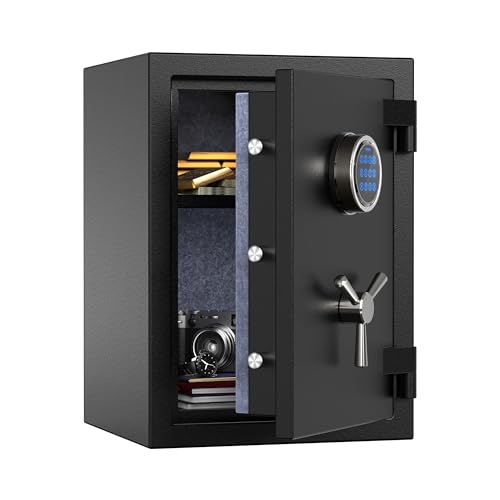
The average cost of a home safe ranges from $250 to $780, with most homeowners spending about $500. Basic models start at $50, while high-end safes can exceed $1,000 depending on features. Factors influencing the price include size, security ratings, and added features like fireproof or biometric capabilities. Additionally, consider installation and maintenance costs for a thorough budget. If you’re curious about installation options and cost-saving tips, we can explore those further.
Key Takeaways
- The average cost of a home safe is around $500, with prices ranging from $250 to $780.
- Basic models start at approximately $50 to $100, while high-end safes can exceed $1,000.
- Mid-range safes typically fall between $200 and $500, depending on features and size.
- Smaller safes can cost between $100 and $800, while larger safes may exceed $15,000.
- Prices increase with added security features, such as fireproof capabilities and biometric locks.
Safe Cost Overview and Factors
When you’re considering investing in a home safe, it’s important to understand that prices typically range from $250 to $780, with most homeowners spending around $500.
Your safe cost overview should factor in size, type, materials, and brand reputation. Smaller safes usually cost between $100 and $800, while larger options can exceed $15,000.
The price increases markedly with added security features, such as fireproof capabilities and thicker steel construction. Higher security ratings also elevate costs.
Ultimately, choosing the right safe involves balancing your budget with the desired security features to protect your valuables effectively.
Safe Installation Costs
When you consider installing a home safe, it’s essential to factor in both labor and delivery costs, which can greatly impact your budget.
Professional installation typically ranges from $150 to $600, while delivery fees for larger safes may add another $75 to $300.
If you’re contemplating a DIY approach, weigh the potential savings against the risks of improper installation and the associated costs of any necessary modifications.
Labor and Delivery Costs
Although the cost of a home safe is important, understanding the labor and delivery costs associated with its installation is equally essential.
Professional installation typically ranges from $150 to $600, influenced by the safe’s weight and complexity. Delivery fees can add another $75 to $300, depending on distance.
If you need safe removal, expect additional costs of $75 to $300, which may sometimes be included in the installation fee.
DIY vs. Professional Installation
Choosing between DIY and professional installation for your home safe can greatly impact both your budget and the security of your valuables.
DIY installation can save you money, but it requires the right tools and knowledge, especially for heavier safes.
On the other hand, professional installation typically costs between $150 to $600, depending on the safe size and installation complexity.
If you’re considering wall or floor safes, the costs can rise due to necessary structural modifications.
Additionally, factor in potential delivery fees and removal costs of old safes, which may add $75 to $300 to your overall installation costs.
Additional Costs and Service Add-Ons
When considering a home safe, it’s essential to factor in additional costs and service add-ons that can enhance its value and functionality.
Extended warranties, routine maintenance, and installation services can greatly impact your total investment.
Understanding these expenses will help you make informed decisions about protecting your valuables.
Warranty Options Explained
Many buyers often overlook the importance of warranty options and service add-ons when purchasing a home safe, yet these factors can greatly impact both the initial investment and long-term ownership costs.
Basic manufacturer warranties are typically included, but investing in extended warranties can range from $50 to $500, offering peace of mind.
You might also benefit from insurance savings, as a certified safe could lower your premiums by 5% to 20%.
Additionally, optional service add-ons, like anchoring or custom features, can enhance functionality but will increase the total cost of ownership, so weigh these choices carefully.
Maintenance Expenses Overview
After considering warranty options, it’s important to understand the ongoing maintenance expenses associated with home safes.
Routine maintenance, like lubricating locks and managing moisture, is essential for longevity but typically incurs low costs. If you own electronic safes, factor in battery replacements costing $5 to $20 annually.
Additional features, such as humidity control, can add $50 to $250 to your expenses, while custom shelving may increase costs by $100 to $600.
Integrating your safe with home security systems can also lead to extra wiring and monitoring expenses, all contributing to your overall maintenance costs.
Installation Service Costs
Understanding the costs associated with installing a home safe is vital for budgeting effectively. Installation service costs can vary considerably, influenced by several factors. Here’s what to take into account:
- Professional Installation: Expect to pay between $150 to $600, depending on the safe’s complexity.
- Delivery Fees: For heavier safes, delivery can range from $75 to $300.
- Additional Service Add-Ons: Services like anchoring or humidity control can add $50 to $600.
Note that structural modifications for wall or floor safes may further increase both time and cost.
Factor these elements into your overall budget to guarantee a smooth installation process.
DIY Installation vs. Professional Installation
When considering home safes, you’ll find yourself weighing the pros and cons of DIY installation against hiring a professional.
DIY installation can save you money, especially for lightweight or portable safes. However, improper installation may compromise security.
On the other hand, professional installation, particularly for high-security safes or complex units, typically costs between $150 and $600 and guarantees proper securing and structural modifications.
Professionals have the tools and expertise to handle heavy safes, making this option more secure.
While DIY might seem budget-friendly, the potential risks can outweigh the initial price tag.
Choose wisely based on your safe’s requirements.
Repairing vs. Replacing a Safe
How do you decide between repairing or replacing a safe? Consider these key factors:
- Cost of Repairs: If repairs exceed 50% of a comparable new safe’s price, replacement may be wiser.
- Age and Warranty: Newer safes under warranty often justify a repair, while older models might not.
- Security Features: Evaluate if your safe’s current security features meet your needs; newer models may offer enhanced protection.
Ultimately, weigh the benefits of investing in a new safe against the cost and reliability of repairs to guarantee your valuables are adequately protected.
Cost-Saving Tips
While investing in a home safe is essential for protecting your valuables, there are several cost-saving strategies that can make this purchase more manageable.
First, shop during sales or off-peak seasons to snag discounts. Consider buying refurbished safes, as they can offer significant savings without sacrificing quality.
Shop during sales for discounts on home safes, and consider refurbished options for quality savings.
Bundling safe installation with other security upgrades might also reduce overall costs through package deals.
Focus on essential features tailored to your needs—extra options can inflate prices.
Finally, perform regular maintenance, like lubricating locks and managing moisture, to avoid costly repairs and extend your safe’s lifespan.
How Angi Gets Its Cost Data
Understanding the costs associated with home safes is essential for making informed purchasing decisions.
Angi gathers its cost data through a meticulous process that combines various reliable sources, including:
- U.S. Bureau of Labor Statistics for accurate pricing.
- Interviews with industry experts ensuring real-world relevance.
- User-generated content that enhances data reliability.
This methodology not only provides trustworthy insights but also reflects current market conditions.
By allowing users to submit quotes from recent projects, Angi continually improves its database, offering you the most reliable information available on home safes.
You’re empowered to make decisions backed by solid, up-to-date cost data.